Yacht Compliance: Essential U.S. Owner Checklist
Quick Summary
- ✓Federal documentation required for vessels 5+ net tons used commercially or desired for international travel benefits.
- ✓Safety equipment requirements scale by vessel size with Type III MSDs (holding tanks) mandatory in Florida No-Discharge Zones.
- ✓Vessels over 400 gross tons require approved Nontank Vessel Response Plans with $8,000+ fines for non-compliance.
- ✓Environmental compliance includes zero-tolerance oil discharge, proper MSD operation, and displayed garbage disposal placards.
- ✓Compliance tracking software prevents expensive missed renewals and creates timestamped records for insurance claims.
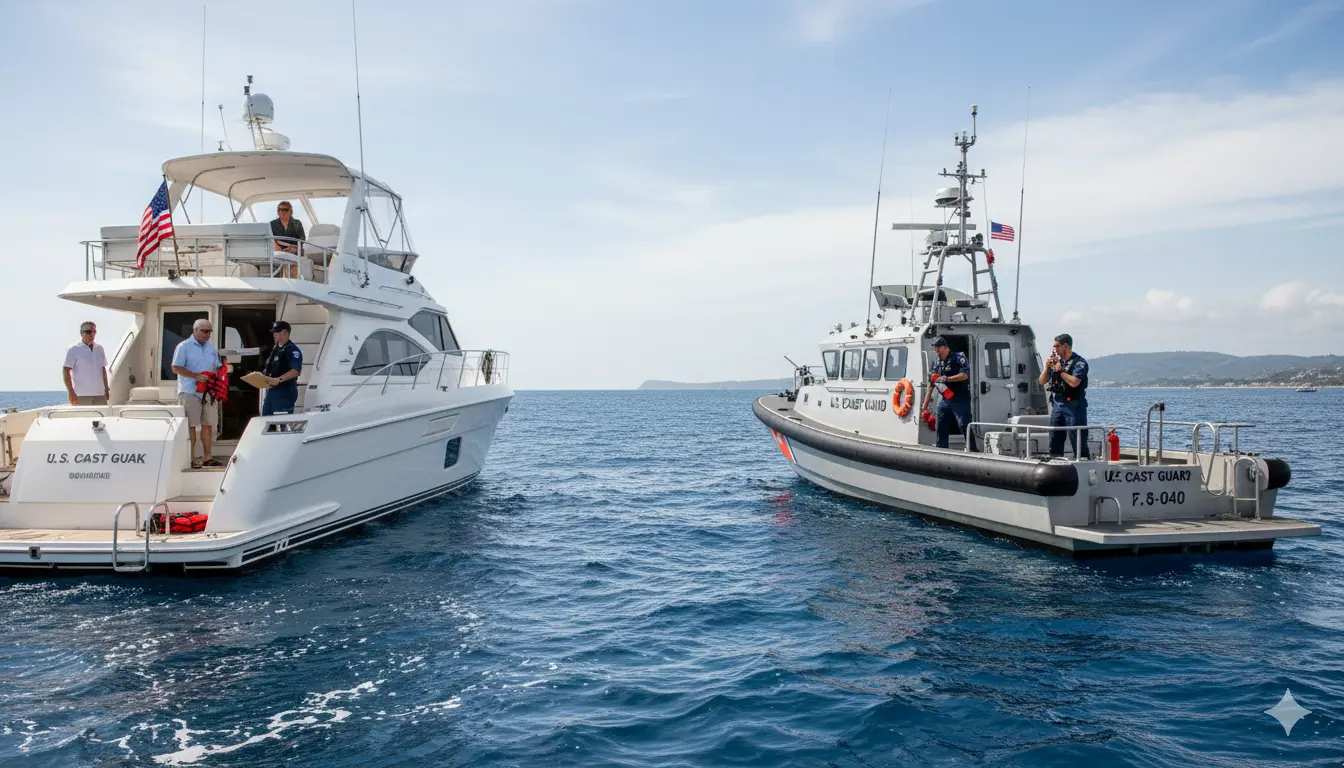
The boarding happened on a perfect Saturday morning off Anna Maria Island.
I watched from my helm as a Coast Guard patrol boat approached a beautiful 52-foot Hatteras about 200 yards away. Just a routine safety check, I thought. The kind every boater expects occasionally.
Thirty minutes later, the owner was sitting on his gunwale with his head in his hands while a Coast Guard officer wrote what looked like a very long citation. I later learned he received three separate violations totaling $12,000 in fines.
His boat was gorgeous. Pristine. Probably worth $800,000. But he was missing required documentation, his flares had expired 14 months earlier, and his vessel response plan—required for his size boat—was nowhere to be found.
The kicker? He had no idea he needed a vessel response plan. He'd owned the boat for three years.
That boarding changed how I think about compliance. I'd been casual about it—registration current, life jackets aboard, fire extinguisher mounted. Check, check, check. But watching someone receive a five-figure fine for paperwork violations made me realize compliance isn't just bureaucracy. It's expensive bureaucracy when you get it wrong.
That weekend, I created a comprehensive compliance checklist for my 42-foot Viking. Then I started tracking everything—documentation renewals, equipment expiration dates, inspection deadlines, environmental requirements, the works. (See our guide on how to track yacht maintenance like a pro for more on setting up a tracking system.)
In three years since that incident, I've been boarded four times. Every single time, the Coast Guard officers have been professional, efficient, and impressed with my organized documentation. Total violations? Zero. Total fines? Zero. Total anxiety during boardings? Also zero.
In this guide, I'm going to share everything I've learned about yacht compliance requirements for U.S. boat owners. This isn't theoretical—it's the practical, real-world system I use on my own vessel and what I recommend to fellow owners at our Tampa Bay yacht club.
Understanding Coast Guard Documentation: When It's Required
Let's start with the most fundamental question: Do you need federal documentation for your yacht?
The answer depends on three factors: size, use, and where you plan to operate.
When Federal Documentation Is Required
Your vessel MUST be federally documented if:
- Size: It measures at least 5 net tons (roughly 27-30 feet for most modern yachts, though this varies by design)
- Use: You engage in commercial fishing, coastwise trade, or wish to obtain a preferred ship mortgage
- International travel: You regularly cruise to foreign ports (though not strictly required, it's highly recommended)
Your vessel SHOULD be federally documented (but not required) if:
- You're over 5 net tons and want to avoid annual state registration renewals
- You travel internationally and want smoother customs procedures
- You want the legal benefits of a preferred ship mortgage
- You prefer the prestige of documentation numbers vs. state registration numbers on your hull
What Documentation Actually Gets You
Federal documentation provides several benefits:
Legal benefits:
- Establishes preferred mortgage status (better financing terms)
- Provides undisputed title record
- Allows use of vessel name without state registration numbers on hull
- Provides admiralty jurisdiction advantages in legal disputes
Operational benefits:
- Recognized as U.S. vessel in foreign ports
- Smoother customs clearance internationally
- One-time documentation vs. annual state renewal
- Hailing port flexibility (can list any U.S. port)
The catch: Documentation costs about $300-500 initially and around $150 every 5 years for renewal. Plus, documented vessels still need state registration in Florida if used in state waters for more than 90 consecutive days.
My Documentation Journey
My 42-footer is federally documented. Here's why I chose documentation:
-
I cruise to the Bahamas 2-3 times per year. Customs officers recognize U.S. documentation immediately. Makes entry/exit faster.
-
I financed through a marine lender. They required documentation for the preferred mortgage status. Non-negotiable for my lender.
-
I prefer the clean look. Instead of "FL 1234 AB" in huge letters, I have my vessel name and hailing port. Cleaner aesthetic.
-
One-time hassle vs. annual renewal. Florida requires annual registration renewal. Documentation is valid for 5 years. Less administrative work.
The Documentation Process
If you decide to document:
Required documents:
- Builder's certification or previous documentation
- Bill of sale
- Proof of U.S. citizenship for all owners
- Application for initial issue, exchange, or replacement
- Measurement documentation (usually provided by previous owner or builder)
Timeline: 4-8 weeks typically, though I've seen it take 12 weeks during busy periods.
Cost: $300-600 for initial documentation (varies if you use documentation service vs. DIY)
Pro tip: Use a documentation service for your first time. The National Vessel Documentation Center is helpful, but the paperwork is complex. I used a service that charged $385 and handled everything. Worth every penny for peace of mind.
State Registration vs. Federal Documentation: The Florida Reality
Here's what confused me when I first bought my boat: even with federal documentation, I still needed Florida state registration.
Let me clear up this confusion.
The Rule for Florida
If your vessel is federally documented AND you use it in Florida waters for more than 90 consecutive days, you must register it with Florida.
For most of us who live in Florida year-round, that means you need both documentation and registration.
What Florida Registration Gets You
Your Florida registration provides:
- Decal with registration number and expiration date
- Florida vessel registration certificate
- Legal authority to operate in Florida state waters
- Access to state boat ramps and facilities
Cost: About $18-42 every two years depending on vessel length. Significantly cheaper than annual registration in many states.
The Display Requirements
Here's where it gets specific:
For federally documented vessels registered in Florida:
- Display the federal documentation number (official number) as your FL registration number
- Apply the FL decal to both sides of the forward half of the vessel
- NO FL registration numbers need to be displayed on hull (unlike state-registered boats)
- Documentation name and hailing port must be displayed on hull per federal requirements
For state-registered-only vessels:
- Display FL registration number (FL 1234 AB format) on both sides of forward half
- Numbers must be at least 3 inches tall
- Block characters, contrasting color with hull
- Read left to right
- Apply registration decals 3 inches behind registration numbers
My Setup
I have:
- Federal documentation (primary legal documentation)
- Florida registration (required for 90+ day use)
- Vessel name and hailing port on transom (federal requirement): "VIKING SPIRIT" over "TAMPA, FL"
- Official documentation number on interior structural member (federal requirement)
- Florida decals on both sides of bow
Total annual cost: ~$30 for state registration (since documentation is every 5 years)
Documentation Renewal Deadlines
This is where tracking becomes critical.
Federal documentation expires exactly 5 years from issue date. The Coast Guard does NOT send reminders.
My near-miss story: My documentation expired on March 15, 2024. I didn't notice until March 8, 2024 when reviewing my files before a Bahamas trip scheduled for March 20.
Panic ensued.
I overnighted a renewal application to the NVDC, paid rush processing fees ($100 extra), and got my new documentation literally the day before departure. That was a $100 lesson in tracking compliance deadlines.
Now I set calendar reminders at:
- 6 months before expiration (start gathering paperwork)
- 3 months before expiration (submit renewal)
- 1 month before expiration (follow up if not received)
Never again.
Safety Equipment Requirements: What's Actually Required By Size
Here's where most boaters think they're compliant but aren't. Coast Guard safety equipment requirements are specific, detailed, and strictly enforced.
Let me break down requirements by vessel size, because this is where that $12,000 fine off Anna Maria Island happened.
Universal Requirements (All Vessels)
Personal Flotation Devices (Life Jackets):
- One USCG-approved wearable PFD for each person aboard
- Must be readily accessible (not in locked compartments or bags)
- Must be proper size for intended wearer
- Must be in good, serviceable condition (no tears, functioning straps, no waterlogging)
As of January 2025, new classification system: The Coast Guard updated PFD classifications from "Type I, II, III, IV, V" to a "Performance Level" system based on buoyancy. Your old Type III jackets are still legal, but new purchases will show Performance Level ratings.
What I learned the hard way: "Readily accessible" means accessible while underway. I stored PFDs in a forward cabin that required opening two doors and moving gear to access. A Coast Guard officer during a safety boarding asked me to retrieve them while he timed me. Took 90 seconds. He considered that NOT readily accessible and gave me a warning to relocate them.
I now store PFDs in a cockpit locker accessible in under 10 seconds.
Requirements for Vessels Under 40 Feet
Fire Extinguishers:
- At least one B-I type marine fire extinguisher if you have:
- Inboard engine
- Closed compartments where fuel tanks are located
- Closed compartments with flammable materials
- Permanently installed fuel tanks
Visual Distress Signals:
- Required when operating in coastal waters, Great Lakes, and territorial seas
- Not required on vessels less than 16 feet
- Must have both day and night signals (or combination devices)
My setup for 42-foot vessel:
- Three B-I fire extinguishers (exceed requirement)
- Three handheld red flares (day/night)
- Three meteor/parachute flares (night)
- One orange smoke signal (day)
- Expiration tracking is critical (see "The $80 Mistake" below)
Sound-Producing Devices:
- Vessels 12-39.4 feet: whistle, horn, or bell
- Vessels 39.4-65.6 feet: whistle or horn plus bell
I have an electric horn (primary) and an air horn canister (backup).
Navigation Lights:
- Functional navigation lights appropriate to vessel size and type
- Required sunset to sunrise and during restricted visibility
- Bulbs must work, lenses must be intact, no cracked housings
Pro tip: Carry spare bulbs for every navigation light. I learned this when my starboard running light failed at dusk 15 miles from port. Had to idle back at 5 knots to minimize visibility risk. Now I carry a complete spare set of bulbs.
Additional Requirements for Vessels 40-65 Feet
This is the range where requirements significantly increase. If you own a boat in this range, pay close attention.
Fire Extinguishers:
- Minimum THREE B-I type OR ONE B-II type fire extinguisher
- Must be Coast Guard approved with current inspection tags
- Must be properly mounted (not rolling around in locker)
Throwable Flotation Device:
- One Type IV (throwable) PFD
- Must be immediately accessible (not stored below)
- Ring buoy or cushion
- Must be in good condition
Sound Signals:
- Whistle or horn audible for 1/2 mile
- Bell (vessels over 39.4 feet)
Ventilation:
- Powered ventilation for all engine and fuel tank compartments (for gasoline engines)
- Must be operational before engine start
Backfire Flame Arrestor:
- Required on all gasoline engines (except outboards)
- Must be Coast Guard approved
- Must be clean and functional
Requirements for Vessels Over 65 Feet
Once you're over 65 feet, you're entering territory with significantly more requirements:
Additional fire extinguishers (specific placement requirements)
Dewatering devices (bilge pumps, manual pumps)
Navigation equipment (depends on operating area)
Placard requirements (oil discharge, garbage disposal)
USCG Vessel Identification Number (permanent display requirement)
And here's the big one that caught the Hatteras owner off Anna Maria Island:
Vessel Response Plan (VRP) / Nontank Vessel Response Plan (NTVRP)
The $12,000 Fine: Vessel Response Plans
Vessels 400 gross tons or greater operating in U.S. waters MUST have a Nontank Vessel Response Plan (NTVRP).
Most yacht owners assume this doesn't apply to them because they think in terms of length, not tonnage. But a 65-foot yacht can easily exceed 400 gross tons depending on design.
The Hatteras that got fined: 52 feet, 420 gross tons. Required NTVRP. Didn't have one.
The violation: $8,000 fine for missing NTVRP, $2,500 for expired flares, $1,500 for missing trash disposal placard. Total: $12,000.
How to check if you need an NTVRP: Your gross tonnage is on your documentation papers. If it says 400 GT or higher, you need an NTVRP.
What an NTVRP includes:
- Oil spill response plan
- Qualified individual (QI) designation with 24/7 contact
- Response organization contact information
- Equipment inventory
- Training and drill documentation
Cost to comply: $3,000-$8,000 to have a marine consultant prepare your NTVRP, plus annual updates.
Is it enforced? Absolutely. The Coast Guard has gotten much stricter about this since 2015. If you're over 400 GT and don't have an NTVRP, you're playing Russian roulette with significant fines.
The $80 Mistake: Expired Flares
I made this mistake myself.
During a routine safety check, I pulled out my flares to show the Coast Guard officer. He checked the dates. Two of three had expired four months earlier.
The fine: $240 per expired flare. $480 total. He let me off with a stern warning and I replaced them the next day.
The lesson: Flares typically expire 42 months from manufacture date. Mark the expiration date on your calendar and replace BEFORE expiration, not after.
My system now:
- Buy flares in October (before hurricane season ends, often on sale)
- Set calendar reminder for 36 months later
- Replace before expiration
- Keep old flares (still useful for training/practice, just not legal for compliance)
Current setup:
- Expires October 2027 (purchased October 2024)
- Calendar reminder: July 2027 "Order new flares"
- Cost: $80 for three handheld red flares
Fire Extinguisher Inspection Tags
Fire extinguishers need annual inspection tags or they're considered non-compliant.
What the Coast Guard checks:
- Current inspection tag (dated within last 12 months)
- Pressure gauge in green zone
- Pin and seal intact
- No visible damage or corrosion
- Proper mounting
My experience: I bought my boat with fire extinguishers that looked fine. Pressure gauges in green. But no inspection tags.
During a boarding, the officer asked for inspection tags. I didn't have them. He let me off with a warning but made it clear: next boarding, they better have current tags.
The solution: I took all three extinguishers to a fire equipment service shop. They inspected, certified, and tagged all three for $45 total. Now I do this every October with my flare replacement.
Pro tip: Some marine stores offer free fire extinguisher inspection during boat show season. I got mine done free at the St. Pete Boat Show in December.
Environmental Compliance: The Rules You Didn't Know Existed
Environmental compliance is where yacht ownership enters territory most boaters don't even know exists. These aren't optional "best practices"—they're federal law with significant penalties.
Marine Sanitation Devices (MSDs)
If your vessel has a toilet (head), you must have a Coast Guard-certified Marine Sanitation Device.
Three types of MSDs:
Type I: Flow-through treatment device that discharges treated waste overboard
- Required for vessels under 65 feet if discharge is permitted
- Must reduce fecal coliform bacteria to specified levels
Type II: Similar to Type I but more effective treatment
- Required for vessels 65 feet and over if discharge is permitted
Type III: Holding tank (most common on recreational yachts)
- Holds all waste for pump-out at marina facilities
- No overboard discharge
The complication: No-Discharge Zones
Many Florida waters are designated No-Discharge Zones (NDZs). In these areas, ALL overboard discharge of sewage is prohibited, even from Type I or II MSDs.
Current Florida NDZs include:
- Florida Keys National Marine Sanctuary (entire Keys)
- Biscayne Bay
- Sarasota Bay
- Naples Bay
- Many other embayments and estuaries
The enforcement: I've seen this enforced. A vessel in Key West was fined $5,000 for discharging treated waste from a Type I MSD in the Keys NDZ. The owner insisted it was treated and legal. Didn't matter—it's a complete no-discharge zone.
My compliance approach:
- I have a Type III MSD (holding tank)
- Y-valve is secured closed with a zip tie (required in NDZs)
- Pump-out every 5-7 days at marina facilities
- Maintain pump-out log (dates, locations, volumes)
The inspection: During boardings, Coast Guard officers have checked:
- Y-valve position (must be in closed position in NDZs)
- Y-valve lock/securing mechanism
- Overboard discharge through-hull (must be secured/disabled in NDZs)
One officer even checked to make sure my Y-valve wasn't just zip-tied but also had the handle removed so it couldn't accidentally be opened.
Compliance cost:
- Initial setup: $0 (boat came with proper MSD)
- Pump-out costs: $20-30 per pump-out, or free at many marinas
- Y-valve lock: $3 for zip ties
- Annual inspection: $0 (I visually check monthly)
Oil and Fuel Discharge Regulations
This one is simple: Zero tolerance.
Any discharge of oil or fuel into U.S. waters is illegal. Period.
What this means practically:
During fueling:
- No drips, spills, or overflows allowed
- Must have absorbent pads ready
- Clean up any spills immediately
- Report spills above reportable quantities
Engine room:
- No bilge discharge with visible oil sheen
- Bilge must be clean and free of fuel/oil
- Any oil/fuel in bilge must be absorbed and properly disposed
Maintenance:
- Oil changes must be done with spill containment
- Used oil must be properly disposed at certified facilities
- No rags, absorbent pads, or materials containing oil can go overboard
The inspection: During one Coast Guard boarding, the officer asked to see my engine room. He specifically looked at:
- Bilge condition (was it clean or oil-contaminated?)
- Absorbent pads (did I have them available?)
- Any visible leaks or weeping
- General cleanliness and maintenance level
My engine room passed. But he told me about a vessel the previous week with 2 inches of oily water in the bilge. They issued a citation and required proof of proper disposal and bilge cleaning before the vessel could continue operation.
The penalties: Fines for oil discharge start at $1,000 and can reach $40,000+ for significant spills. Not worth the risk.
My prevention system:
- Absorbent pads in bilge (replace monthly or when contaminated)
- Oil change pump setup (extract oil directly to containers, no spills)
- Drip pan under fuel filters during changes
- Fuel/oil absorbent socks ready during fueling operations
- Monthly bilge inspection and cleaning
Garbage and Trash Disposal
MARPOL Annex V regulations govern what you can and can't discharge overboard.
The simple rule: If you're within 3 miles of shore (which is most recreational boating), you can't throw ANYTHING overboard except:
- Fresh fish parts
- Untreated wood (rare on modern boats)
Everything else must be stored and disposed of properly ashore.
Required placards for vessels 26 feet and longer:
You must display a durable placard at least 4" x 9" notifying passengers and crew of discharge restrictions.
The Hatteras's $1,500 mistake: The 52-footer off Anna Maria Island didn't have the required garbage disposal placard. $1,500 fine.
Where to get the placard:
- Marine stores sell them ($15-30)
- Coast Guard website has downloadable versions you can laminate
- Some manufacturers include them
Where to display it: Must be "prominently displayed" where crew/passengers can see it. I have mine in the galley area where people handle trash.
Ballast Water Management
For most recreational yacht owners, this doesn't apply. But if you have a larger vessel with ballast tanks (trawlers, some expedition yachts), you may need to comply with ballast water management regulations.
When it applies:
- Vessels with ballast tanks
- Operating in U.S. waters
- Moving between different water bodies
What's required:
- Ballast water management system or ballast water exchange procedures
- Record keeping
- Reporting
This is complex enough that if it applies to you, you need professional marine environmental compliance consulting.
Air Emissions (Large Yachts)
Vessels over 400 GT may be subject to air emissions regulations including:
- Engine emission standards
- Fuel sulfur content limits
- Vapor recovery during fueling
For most recreational yacht owners under 100 feet, this isn't a concern. But if you're in the superyacht category, you need specialized compliance support.
The NTVRP Requirement (Again, Because It's Important)
I mentioned this under safety equipment, but it's also an environmental requirement.
If your vessel is 400 gross tons or more, you must have an approved Nontank Vessel Response Plan addressing oil spill response.
The purpose: In the event of an oil spill from your vessel, you must have:
- Pre-identified response contractors
- A qualified individual to manage response
- Equipment inventory
- Financial responsibility documentation
- Training and drill records
The reality: Most yacht owners in this size range hire a marine consulting firm to prepare and maintain their NTVRP.
Cost: $3,000-$8,000 initial preparation, then $800-$1,500 annually for updates and drills.
Enforcement: If you're over 400 GT and enter U.S. waters without an approved NTVRP, you can be denied entry or fined significantly. The Coast Guard is serious about this.
Insurance and Liability Requirements: Legal vs. Recommended
Here's something that surprises many new yacht owners: In most cases, boat insurance is not legally required.
Let me explain the nuance.
What's Legally Required
Arkansas: Liability coverage of $50,000 minimum for vessels with 50+ HP engines
Utah: $25,000/$50,000 bodily injury, $15,000 property damage
Hawaii: $500,000 liability for vessels in state harbor facilities
Florida (where I operate): No insurance legally required for recreational vessels.
Everywhere else: Generally no legal requirement for recreational vessel insurance.
So Why Does Everyone Have Insurance?
Because while it's not legally required by the Coast Guard or most states, it's functionally required by:
Your lender: If you financed your boat, your bank absolutely requires insurance. Non-negotiable. Typically they require:
- Hull coverage for full loan value
- Liability coverage (usually $1M minimum)
- Named storm/hurricane coverage
- Lender listed as loss payee
Your marina: Most marinas require proof of liability insurance before renting you a slip. Typical requirements:
- $300,000-$1,000,000 liability coverage
- Marina listed as additional insured
- Current policy certificates on file
Your common sense: Even if your boat is paid off and you anchor out, insurance is highly recommended. Here's why:
What Yacht Insurance Actually Covers
Hull coverage:
- Physical damage to your vessel
- Collision, grounding, fire, theft, vandalism
- Weather-related damage
- Sinking
Liability coverage:
- Bodily injury to others
- Property damage to other vessels/docks
- Legal defense costs
- Environmental cleanup if you cause pollution
Medical payments:
- Medical expenses for passengers injured on your vessel
- Typically $1,000-$5,000 per person
Personal property:
- Electronics, fishing equipment, personal belongings
- Usually 10% of hull value
Towing and assistance:
- On-water towing
- Emergency services
- Some policies include this; others require separate Sea Tow/TowBoat U.S. membership
Uninsured boater coverage:
- Covers you if hit by uninsured vessel
- Often overlooked but valuable
My Insurance Story
When I bought my 42-foot Viking, I thought I'd save money by getting basic coverage. Big mistake.
My initial "budget" policy:
- $200,000 hull coverage (boat value at time)
- $300,000 liability
- 2% named storm deductible (seemed fine)
- Cost: $2,100/year
What happened: Hurricane Idalia threatened Tampa Bay in August 2023. I hauled out for safety (cost: $1,850). Then I realized my 2% hurricane deductible was $4,000 if any damage occurred.
If the storm had caused $20,000 in damage (entirely possible with a direct hit), I would have been responsible for $4,000 plus the $1,850 haul-out cost.
I upgraded my policy:
- $225,000 hull coverage (increased with market value)
- $1,000,000 liability (marina required this anyway)
- $2,500 flat hurricane deductible (vs. 2%)
- $5,000 personal property coverage
- Agreed value policy (no depreciation)
- Survey waiver (no required survey updates for 5 years)
- Cost: $3,400/year
The peace of mind: Worth every dollar. I sleep better knowing that if something catastrophic happens, I'm not financially destroyed.
Recommended Coverage Levels
Based on conversations with fellow yacht owners and insurance professionals:
Minimum recommended (30-45 foot yacht):
- Hull coverage: Agreed or current market value
- Liability: $1,000,000
- Medical payments: $5,000 per person
- Hurricane deductible: $2,500 flat or 2% (whichever is less)
Better coverage (what I have):
- Hull coverage: Agreed value, inflation guard
- Liability: $1,000,000
- Medical payments: $5,000 per person
- Hurricane deductible: $2,500 flat
- Personal property: $5,000
- Towing coverage: Included or separate membership
Premium coverage (45-75 foot yachts):
- Hull coverage: Agreed value with inflation adjustment
- Liability: $2,000,000+
- Medical payments: $10,000 per person
- Hurricane deductible: $2,500-$5,000 flat
- Personal property: $10,000+
- Crew coverage (if you have paid crew)
- Charter coverage (if you occasionally charter out)
What Affects Your Insurance Rates
Factors that increase rates:
- Hurricane exposure (Florida, Gulf Coast, Atlantic coast)
- Boat age (older boats cost more to insure)
- Boat value (higher value = higher premium)
- Your experience (new boaters pay more)
- Claims history (past claims increase rates)
- Cruising area (offshore vs. coastal vs. inland)
- Liveaboard status (living on boat increases risk)
Factors that decrease rates:
- Boating safety courses (10-15% discount typically)
- Years of experience (discount after 5+ years)
- Claim-free years (annual decreases after no claims)
- Safety equipment beyond requirements
- Theft deterrent systems
- Higher deductibles (if you can afford the risk)
- Bundling policies (if insurer offers home/auto/boat)
My discount strategy: I took a USCG Auxiliary boating safety course ($35) and received a 12% discount on my insurance ($408/year savings). The course paid for itself 11 times over in the first year alone.
The "Bare Minimum" Approach (Not Recommended)
Some owners try to save money by:
- Carrying only liability coverage (no hull)
- High deductibles ($10,000+)
- Limited coverage area
- Excluding hurricane coverage
When this works:
- Older boat fully paid off
- Low market value
- Minimal use
- Can afford total loss
- Operating in low-risk area (no hurricanes)
When this backfires: A fellow yacht club member had a 1985 Grand Banks trawler worth about $80,000. He carried only $300,000 liability (marina requirement) with no hull coverage.
Someone broke into his boat and stole $12,000 in electronics. Then vandalized the interior causing another $6,000 in damage. Total loss: $18,000.
Insurance payout: $0 (no hull coverage).
He paid out of pocket, then paid $2,400 for proper coverage after that. Too late.
My recommendation: If you can't afford proper insurance, you can't afford the boat. I know that sounds harsh, but one uninsured incident can cost more than 5-10 years of insurance premiums.
International Waters and Foreign Ports: What You Need to Know
Cruising to the Bahamas, Mexico, or Caribbean adds a whole new layer of compliance requirements. Here's what you need to know from someone who's done it many times.
Before You Leave U.S. Waters
Documentation requirements:
- Federal documentation highly recommended (state registration works but is less recognized)
- Vessel radio license (ship station license) required if you have VHF radio and leave U.S. waters
- Passports for all passengers (passport cards NOT sufficient for boat travel)
- Vessel clearance from U.S. Customs (use ROAM app or CBP website)
Insurance considerations:
- Verify your policy covers Bahamas/Caribbean/Mexico
- Many policies exclude Cuba
- Some require notification before extended cruising
- Ensure towing/salvage coverage extends to foreign waters
Safety equipment:
- Same U.S. requirements apply plus destination country requirements
- Bahamas requires life jackets, fire extinguisher, sound signals, navigation lights
- Some countries require specific flares or equipment
The Cruising Permit (For Foreign Vessels in U.S. Waters)
This doesn't apply to U.S.-documented vessels, but if you're considering buying a foreign-flagged yacht, understand this:
U.S. Cruising Permit allows:
- Foreign-flagged pleasure vessels
- From eligible countries (Bahamas, Cayman Islands, BVI, Marshall Islands, Jamaica)
- To cruise U.S. waters for up to one year
- Without formal entry/exit at every port
Requirements:
- Must obtain at first U.S. port of entry
- Valid for one year
- Must leave U.S. waters for 15+ days before renewal
- Only valid for pleasure use (no charter)
Why this matters: I almost bought a Cayman Islands-registered yacht. The cruising permit requirement would have added complexity and limited my cruising plans. I chose a U.S.-documented vessel instead.
Entering Foreign Ports: The Process
96 hours before arrival: Submit Notice of Arrival to destination country (Bahamas requires this via email or website)
Upon arrival in foreign country:
- Fly Q flag (yellow quarantine flag) until cleared
- No one leaves vessel until cleared by customs/immigration
- Captain takes ship's papers, passports, and completed forms to customs office
- Obtain cruising permit or clearance documents
- Take down Q flag after clearance
Required documents for Bahamas entry:
- Vessel documentation or registration
- Proof of insurance
- Passports for all passengers
- Customs declaration form
- Immigration forms for all passengers
- Fishing permit application (if you plan to fish)
- Bahamas cruising permit fee ($150 for vessels under 35 ft, $300 for 35+ ft, valid for up to 90 days)
My experience: First time entering Bahamas at Bimini, I wasn't prepared. Waited 2 hours at customs because I didn't have forms pre-filled. Now I complete everything before arrival. In and out in 20 minutes.
Customs Procedures and Compliance
Departing U.S. waters:
Use the CBP ROAM app (Report Off-Shore Arrival Mobile):
- Register vessel in app
- Report your departure before leaving
- Provide trip details and passenger information
- Receive confirmation
Returning to U.S. waters:
- Submit arrival notice 96 hours before arrival via ROAM app or CBP website
- All passengers must remain on vessel until cleared
- Use Video Conferencing option (if available) or report in person to CBP
- Declare all purchases and goods
- Pay duties if applicable
What CBP checks on return:
- Passports and passenger manifests
- Declared purchases
- Firearms (must be declared)
- Alcohol/tobacco limits
- Restricted foods/plants/animals
- Any maintenance or repairs done abroad
My near-miss: Returning from Bahamas, I didn't declare a $800 fishing reel I bought in Freeport. The CBP officer asked if I purchased anything. I said "just some snacks and drinks."
He asked to see my fishing equipment. Saw the brand new reel with Bahamian store sticker still on it.
Not good.
He gave me a stern lecture about declaration requirements and made me pay the duty ($40) plus a penalty ($100). Could have been worse—intentional failure to declare can result in seizure and fines up to $10,000.
Lesson learned: Declare everything. The duty is usually minimal. The penalty for not declaring is not.
Radio Licensing for International Travel
If you have a VHF radio and travel to foreign waters, you need a Ship Station Radio License.
Who needs it:
- Any vessel with VHF/SSB radio traveling outside U.S. waters
- Required by international treaty
How to get it:
- Apply through FCC website
- Cost: $220 for 10 years
- Processing time: 2-4 weeks (electronic version immediately, physical license mailed)
- Must display call sign on vessel
My experience: I didn't know about this requirement until my second Bahamas trip. Fortunately wasn't asked for it, but I applied immediately after returning. Now I have it properly displayed and carry copies aboard.
Why it matters: While not frequently checked, foreign countries can require it, and technically you're non-compliant without it when using VHF in foreign waters.
Country-Specific Requirements
Different countries have different requirements:
Bahamas:
- Cruising permit required
- Fishing permit if you fish ($20)
- No spearfishing with scuba
- Strict conch and lobster regulations
- Protected areas require permits
Mexico:
- Temporary Import Permit (TIP) for vessel
- FMM tourist visa for passengers
- Port captain clearance at each state
- Fishing license if you fish
- Longer clearance process than Bahamas
Caribbean islands:
- Each has unique requirements
- Most require clearance at every island
- Some have expensive fees ($50-200 per entry)
- Some require local cruising permits
My approach: I primarily cruise to Bahamas (2-3 times per year) because the clearance process is straightforward and costs are reasonable. Mexico and Caribbean are on my list but require more planning and budget.
Compliance Checklists: Your Inspection Prep System
After three years of tracking compliance, I've developed a system that makes Coast Guard boardings stress-free. Here are the checklists I actually use.
Pre-Departure Checklist (Every Trip)
Documentation:
- Vessel documentation/registration aboard
- Insurance certificate aboard
- Radio license aboard (if traveling international)
- Passports for all passengers (if traveling international)
Safety Equipment:
- Life jackets: Count matches passenger count, readily accessible
- Fire extinguishers: Pressure in green, inspection tags current
- Flares: Count complete, expiration dates current
- Throwable PFD: Accessible, in good condition
- Sound signals: Horn functional, backup canister available
- Navigation lights: All functional, spare bulbs aboard
Environmental Compliance:
- Holding tank: Y-valve in proper position
- Bilge: Clean, no oil sheen
- Garbage: Disposal placard displayed
- Oil absorbent materials: Available and accessible
Operational:
- Navigation lights tested
- VHF radio tested
- Bilge pumps tested
- Engine room ventilation operational
- Weather forecast reviewed
- Float plan filed (with family/marina)
Time required: 10 minutes once you have the system down.
Monthly Compliance Check
First Sunday of every month, I do this 30-minute inspection:
Documentation review:
- Check expiration dates on all documentation
- Verify registration decals legible and intact
- Review insurance policy for any changes needed
Safety equipment inspection:
- Check fire extinguisher pressure gauges
- Inspect PFD condition (tears, broken straps, waterlogging)
- Verify flare count and expiration dates
- Test horn and navigation lights
- Check throwable PFD condition
Environmental systems:
- Inspect bilge for oil/fuel contamination
- Check holding tank and plumbing
- Verify garbage disposal placard intact
- Inspect engine room for leaks
Maintenance tracking:
- Review upcoming maintenance due dates
- Check engine hours vs. service intervals
- Verify equipment warranty and certification dates
Time required: 30 minutes
Annual Compliance Review
Every October (before hurricane season ends, before winter cruising), I do a comprehensive review:
Documentation:
- Review all vessel documentation expiration dates
- Submit renewals if within 6 months of expiration
- Update insurance policy for increased vessel value
- Verify marina has current insurance certificates
Safety equipment replacement/update:
- Replace flares if expiring within 6 months
- Service fire extinguishers (annual inspection)
- Replace any damaged PFDs
- Update first aid kit supplies and medications
- Replace expired emergency food/water
Environmental compliance:
- Professional MSD inspection
- Bilge cleaning and absorbent pad replacement
- Order new garbage disposal placard if faded
- Review any new environmental regulations
Professional inspections:
- Haul out for bottom inspection/service
- Through-hull inspection
- Zinc replacement
- Professional safety equipment inspection
- HVAC service
Record updates:
- Update vessel log
- Organize maintenance records
- Update compliance tracking spreadsheet
- Review and update emergency contacts
Time required: 4-6 hours plus professional service time
Coast Guard Boarding Checklist
When you see a Coast Guard vessel approaching, here's what to have ready:
Before they board:
- Reduce speed and prepare to be boarded
- Have crew put on life jackets if requested
- Prepare documentation in waterproof folder
- Designate crew to secure loose items
- Remain calm and professional
Documents to have immediately accessible:
- Vessel documentation or registration
- Insurance certificate
- Radio license (if applicable)
- Fishing licenses (if fishing)
Equipment they'll check:
- Life jackets (count, condition, accessibility)
- Fire extinguishers (pressure, inspection tags, mounting)
- Flares (count, expiration, accessibility)
- Throwable PFD (presence, condition, accessibility)
- Sound signals (functionality)
- Navigation lights (if at night or they request demo)
- Holding tank (Y-valve position, through-hull configuration)
- Bilge condition (oil contamination check)
- Garbage disposal placard (display)
How to interact:
- Polite and professional
- Answer questions directly and honestly
- Don't volunteer extra information
- Don't open compartments unless asked
- Don't argue if they find violations
- Accept any warnings or citations professionally
- Ask for clarification if needed
My boarding experiences:
Boarding 1 (off Egmont Key): Routine safety check. 15 minutes. Officer checked life jackets, fire extinguishers, flares, documentation. No issues. Professional and friendly.
Boarding 2 (Tampa Bay): Random boarding near shipping channel. They asked about our trip plans and checked similar items. Also looked at bilge and holding tank. No issues. 20 minutes.
Boarding 3 (Returning from Bahamas): Customs and Coast Guard joint boarding. Checked all safety equipment plus searched for contraband, checked purchases and declarations. 45 minutes. No issues but thorough.
Boarding 4 (Boca Grande Pass): Fishing check during tarpon season. Checked fishing licenses, fish count, and standard safety equipment. 10 minutes.
Pattern: They're professional, efficient, and courteous when you're compliant and cooperative. Have your documentation organized and equipment accessible, and boardings are stress-free.
Using Software to Maintain Compliance
After that near-miss with my documentation expiration, I realized I needed better tracking. Spreadsheets weren't cutting it.
I researched yacht management software specifically for compliance tracking. Here's what I learned and what I use now.
Why Software Matters for Compliance
The problem with paper/spreadsheets:
- Easy to lose track of multiple expiration dates
- No automatic reminders
- Hard to maintain detailed records
- Difficult to access when away from home
- Time-consuming to update
What good yacht management software provides:
Automated expiration tracking:
- Documentation renewal dates
- Registration renewals
- Insurance policy expiration
- Safety equipment expiration (flares, fire extinguisher inspections)
- Maintenance intervals based on engine hours or calendar
- Warranty expirations
- Certification dates
Reminder system:
- Email alerts at custom intervals (90 days, 30 days, 7 days before expiration)
- Mobile app notifications
- Escalating reminders as deadlines approach
Record organization:
- Digital copies of all documents
- Maintenance history
- Expense tracking
- Equipment warranties
- Service provider contacts
- Parts inventory
Accessibility:
- Cloud-based access from anywhere
- Mobile app for on-boat access
- Offline mode for when cellular isn't available
- Shareable with crew, family, or service providers
My System: YachtWyse Compliance Tracking
After trying several options, I started using YachtWyse for compliance tracking. Here's how I set it up:
Initial setup (took about 2 hours):
-
Entered vessel information:
- Documentation number and expiration date
- State registration and renewal date
- Insurance policy number, provider, expiration
- Radio license and expiration
-
Loaded all safety equipment:
- Life jacket inventory with size and condition notes
- Fire extinguisher locations, inspection dates
- Flare inventory with expiration dates
- First aid kit contents and medication expirations
- Navigation equipment
-
Set up maintenance tracking:
- Engine service intervals
- Generator service intervals
- HVAC service schedule
- Bottom cleaning schedule
- Zinc replacement schedule
- Through-hull inspections
-
Uploaded documents:
- Scanned copies of documentation
- Insurance policies
- Safety equipment certificates
- Maintenance records
- Warranty documents
- Owner's manuals
Daily use (takes 2-3 minutes per trip):
Before departure: Quick checklist review on mobile app
- All compliance items show green (current)
- Any yellow warnings get addressed
- Red alerts stop me from departing
After trip: Log engine hours
- Software automatically calculates next maintenance
- Updates based on actual hours vs. calendar intervals
Ongoing: Receive automated reminders
- 90-day reminder: "Vessel documentation expires in 90 days"
- 60-day reminder: "Order new flares—current set expires in 60 days"
- 30-day reminder: "Fire extinguisher annual inspection due"
- 7-day reminder: "Registration renewal deadline approaching"
What I Track in the System
Expiration dates:
- Federal documentation (March 15, 2029)
- State registration (June 30, 2026 - biennial)
- Insurance policy (October 1, annually)
- Radio license (August 12, 2033)
- Sea Tow membership (April 15, annually)
Safety equipment:
- Flares expire: October 2027
- Fire extinguisher inspections: October 2025 (annual)
- Life jacket condition: Inspected monthly, replaced as needed
- First aid kit medications: Various dates
Maintenance intervals:
- Engine oil change: Every 100 hours or annually (currently at 87 hours since last)
- Transmission service: Every 200 hours or 2 years (last done April 2024)
- Generator service: Every 100 hours or annually (currently at 76 hours)
- Impeller replacement: Annually (last done March 2025)
- Bottom cleaning: Monthly (next due: December 15, 2025)
- Bottom paint: Every 18 months (next due: March 2026)
Compliance inspections:
- Haul-out inspection: Annual (last done: October 2024)
- Through-hull service: Every 2 years (last done: October 2024)
- HVAC service: Annual (last done: May 2025)
The ROI of Compliance Software
Annual cost: $240 for premium yacht management software
What it saved me:
Prevented missed documentation renewal:
- Potential operation without valid documentation: $5,000+ fine
- Rush processing fees avoided: $100
- Peace of mind: Priceless
- Value: $5,000+
Optimized maintenance intervals:
- Prevented over-servicing (I was changing oil every 75 hours; manufacturer says 100 hours is fine)
- Savings: ~$300/year
- Value: $300
Avoided equipment expiration fines:
- Software reminded me to replace flares before expiration
- Avoided $240+ per expired flare
- Value: $720 potential (3 flares x $240 fine)
Better expense tracking:
- Identified $1,200 in tax-deductible expenses I hadn't tracked previously
- Value: ~$350 in tax savings
Time savings:
- Manual tracking took ~2 hours/month
- Software takes ~15 minutes/month
- Savings: ~21 hours/year
- Value at $50/hour: $1,050
Total annual value: $7,420 Software cost: $240 Net value: $7,180
ROI: 2,992%
Even if you only count the hard-dollar savings (avoided fines and tax deductions), that's $6,070 in value for $240 cost. Worth it.
Features to Look For in Compliance Software
Based on my experience, must-have features:
Essential:
- Expiration date tracking with automated reminders
- Document storage (cloud-based)
- Mobile app with offline access
- Maintenance interval tracking (hours and calendar)
- Expense tracking
Very useful:
- Customizable checklists
- Service provider directory/contacts
- Parts inventory tracking
- Trip logging
- Weather integration
- Fuel tracking
Nice to have:
- Social features (share with crew/family)
- Analytics and reports
- Budgeting tools
- Equipment warranty tracking
- Integration with marine services
What I don't need:
- Complex fleet management features (I have one boat)
- Commercial vessel compliance (I'm recreational)
- Crew scheduling (no paid crew)
- Charter management (don't charter)
Free vs. Paid Options
Free options:
- Google Calendar with reminders (basic expiration tracking)
- Spreadsheet with manual updates (time-consuming)
- Paper logbook (can't get reminders)
Paid options ($100-400/year):
- Dedicated yacht management software
- Automated reminders
- Cloud storage
- Mobile apps
- Better organization
My recommendation: If you're serious about compliance and your boat is worth more than $50,000, spend the $200-300 on proper software. The first missed expiration or prevented fine will pay for years of subscriptions.
My Current Setup
YachtWyse: Primary compliance and maintenance tracking ($240/year)
- All expiration dates
- Maintenance intervals
- Document storage
- Expense tracking
Google Calendar: Backup reminders (free)
- Major deadlines duplicated here
- Shared with family
- Redundant system in case software fails
Paper backup: Waterproof folder aboard vessel (free)
- Physical copies of all critical documents
- Laminated checklists
- Emergency contacts
- Updated quarterly
Why three systems? Redundancy. If my phone dies during a boarding, I have paper documents. If I'm traveling and need to check a date, I have Google Calendar. For daily use and detailed tracking, YachtWyse is primary.
Putting It All Together: Your Compliance Action Plan
Let's make this actionable. Here's exactly what you should do right now to get your compliance house in order.
Immediate Actions (Do This Week)
Day 1: Documentation audit
- Gather all vessel documentation, registration, insurance, licenses
- Check every expiration date
- Make a list of anything expiring within 6 months
- Make a list of anything already expired (address immediately)
- Take photos or scan copies of all documents
Day 2: Safety equipment inspection
- Count life jackets (one per passenger capacity?)
- Check fire extinguisher pressure gauges and inspection tags
- Check flare expiration dates
- Verify throwable PFD presence and condition
- Test horn and navigation lights
- Make shopping list for any missing/expired items
Day 3: Environmental compliance check
- Verify you have proper MSD for your toilet
- Check Y-valve position and security
- Inspect bilge for oil contamination
- Verify garbage disposal placard is displayed
- Review operating area for No-Discharge Zones
Day 4: Order compliance items
- Replace any expired flares
- Schedule fire extinguisher inspection if needed
- Order missing safety equipment
- Print or order garbage disposal placard if missing
- Consider compliance software subscription
Day 5: Set up tracking system
- Create spreadsheet or sign up for yacht management software
- Enter all expiration dates
- Set up reminders (90, 30, and 7 days before each deadline)
- Upload or file document copies
- Create compliance folder (digital and physical)
Time investment: ~4-6 hours total Cost: $50-300 depending on what you need to replace Value: Avoiding $500-$12,000 in potential fines
Monthly Maintenance
First Sunday of every month:
- Run through monthly compliance checklist (30 minutes)
- Update tracking system with any changes
- Address any yellow/warning items
- Order replacements for items expiring within 90 days
After every trip:
- Log engine hours
- Note any equipment issues
- Update trip log
Time commitment: ~45 minutes per month
Quarterly Reviews
Every 3 months:
- Review all expiration dates
- Submit any renewals due within 6 months
- Deep-clean bilge and engine room
- Inspect all safety equipment thoroughly
- Update document copies if any changes
- Backup digital files
Time commitment: 2-3 hours per quarter
Annual Comprehensive Review
Every October (my schedule—choose what works for you):
- Complete annual compliance checklist
- Professional inspections (haul-out, through-hulls, safety equipment)
- Replace all items expiring within 6 months
- Review insurance coverage and adjust if needed
- Update emergency contacts
- Review compliance software and adjust reminders
- File annual records
Time commitment: 4-6 hours plus professional service time Cost: $500-2,000 for professional services Value: Prevent $5,000-15,000 in potential repairs from missed maintenance
Your Customized Compliance Calendar
Here's a template. Customize with your specific dates:
January:
- Review insurance coverage
- Order items expiring in Q2
- Winter system checks
March:
- Check life jacket condition after winter storage
- Verify registration current for upcoming season
April:
- Spring commissioning and compliance check
- Test all safety equipment
June:
- Hurricane preparation compliance review
- Verify insurance includes named storm coverage
- Check holding tank and environmental systems
August:
- Mid-season safety equipment check
- Order items expiring in Q4
October:
- Annual haul-out and inspection
- Replace flares (my schedule)
- Service fire extinguishers
- Deep compliance review
- Hurricane season debrief
November:
- Verify all documentation current for winter cruising
- Update float plans for winter travel
Quarterly (Jan/Apr/Jul/Oct):
- Comprehensive compliance review
- Submit any renewals
- Professional inspections
- Update records
The "Compliance Binder" Approach
Some owners prefer a physical system. Here's what works:
Get a waterproof binder with clear page protectors.
Section 1: Critical Documents
- Vessel documentation/registration (original or certified copy)
- Insurance declarations page
- Radio license (if applicable)
- Recent survey (if available)
Section 2: Safety Equipment
- List of all safety equipment (PFDs, fire extinguishers, flares)
- Expiration dates and replacement schedule
- Inspection certificates
- Safety equipment inventory checklist
Section 3: Environmental Compliance
- MSD certificate
- Garbage disposal placard (copy)
- Environmental compliance checklist
- Pump-out log
Section 4: Maintenance Records
- Service history by system
- Parts receipts
- Warranty documents
- Maintenance schedule
Section 5: Emergency Information
- Emergency contacts
- Insurance claim process
- Sea Tow/TowBoat U.S. membership info
- Coast Guard contact info
- Marina contact info
Keep this binder:
- On vessel at all times
- In a specific, known location
- Accessible to crew/family
- Updated quarterly
The Peace of Mind Factor
Three years ago, Coast Guard boardings made me anxious. Do I have everything? Are my documents current? Will they find something wrong?
Now? I'm completely relaxed. Last boarding, the officer commented, "You're one of the most organized boats I've boarded this month."
That's not bragging—that's the result of a systematic approach to compliance.
The mental shift:
- Compliance isn't a burden—it's peace of mind
- Tracking isn't busy-work—it's risk management
- Organization isn't optional—it's professional seamanship
When you know you're compliant, boardings are routine. You hand over documentation confidently. You show equipment without anxiety. You answer questions directly because you know your boat is squared away.
That confidence is worth the investment.
Your Compliance Journey Starts Now
Look, I get it. This guide is long. The requirements are extensive. It feels overwhelming.
But here's the truth: compliance is not optional. The Coast Guard doesn't care if you didn't know about a requirement. Ignorance isn't a defense against a $12,000 fine.
You have two choices:
Option 1: Wing it and hope you don't get boarded or that everything is okay when you do.
Option 2: Spend a few hours now setting up a system that makes compliance automatic and stress-free.
That fellow owner off Anna Maria Island chose Option 1. Cost him $12,000.
I chose Option 2. Cost me about 6 hours of setup time and $240 for software. Saved me thousands in potential fines and given me complete peace of mind for three years.
Start with these three actions today:
-
Check your documentation expiration dates right now. Right now. Go grab your papers and look. If anything expires within 6 months, put renewal on your calendar immediately.
-
Count your flares and check expiration dates. Takes 60 seconds. If they're expired or close, order new ones today.
-
Decide on a tracking system. Software, spreadsheet, or compliance binder—pick one and start using it this week.
Those three actions take less than an hour and address the most common violations.
Then, over the next month:
- Work through the comprehensive checklists in this guide
- Set up your monthly and quarterly review schedule
- Build your compliance binder or software system
- Address any gaps in equipment or documentation
The result: A vessel that's fully compliant, a system that maintains compliance automatically, and the confidence that comes from knowing you're doing it right.
Track All Your Compliance Deadlines Automatically
Everything I've shared in this guide—the expiration tracking, the automated reminders, the organized documentation, the maintenance intervals—that's exactly what YachtWyse's compliance tools are built to handle.
Instead of juggling spreadsheets, paper calendars, and hoping you remember renewal dates, YachtWyse automatically:
- Tracks all your documentation, registration, and license expirations
- Reminds you 90, 30, and 7 days before any deadline
- Maintains your safety equipment inventory and expiration dates
- Schedules maintenance based on engine hours and calendar intervals
- Stores digital copies of all your compliance documents
- Generates pre-boarding checklists for Coast Guard inspections
The same system I use on my Viking to stay violation-free for three years.
Don't wait for a boarding to discover what you're missing. Don't learn about compliance through a $12,000 fine like that Hatteras owner.
Try YachtWyse's compliance tracking tools and get your first 30 days free.
Because peace of mind on the water shouldn't require constant anxiety about paperwork.
Learn more about YachtWyse compliance tools →
About the author: This compliance guide reflects three years of personal experience maintaining a 42-foot federally documented yacht in Florida waters, supplemented by four Coast Guard boardings (zero violations), international cruising experience, and extensive research of current U.S. Coast Guard regulations. All compliance requirements referenced are current as of November 2025. Always verify current requirements with the U.S. Coast Guard or qualified marine documentation service, as regulations can change.
Disclaimer: This guide is for informational purposes only and does not constitute legal advice. Compliance requirements vary by vessel type, size, use, and operating area. Consult with the U.S. Coast Guard, marine attorneys, or professional documentation services for vessel-specific compliance guidance.
Sources:
- U.S. Coast Guard Boater's Guide to Federal Requirements
- BoatUS Foundation Federal Equipment Requirements
- Florida Vessel Registration Requirements (FLHSMV)
- U.S. Coast Guard Documentation Requirements
- NTVRP Requirements (Döhle Yachts)
- U.S. Customs and Border Protection - Boating Requirements
- Yacht Insurance Requirements by State (Casey Insurance)
- Cruising Permits for U.S. Waters (Oceanskies)

Written by
YachtWyse Team
Maritime Technology Experts
The YachtWyse team brings decades of combined experience in maritime operations, marine engineering, and software development. We write from real-world experience managing vessels from 30ft cruisers to 100m+ superyachts.
Ready to Simplify Your Yacht Management?
YachtWyse helps owner-operators track maintenance, manage costs, and get AI-powered diagnostic assistance. Start your free trial today.
Request a DemoRelated Articles
Flag State Survey Prep: Digital PMS Cuts Deficiencies
How digital planned maintenance systems help superyachts prepare for flag state surveys and reduce deficiencies. A practical guide for captains and engineers.
MLC Hours of Rest: Automated Yacht Crew Tracking
How automated MLC hours of rest tracking eliminates compliance gaps, prevents flag state detentions, and gives DPAs audit-ready crew rest records across their fleet.
ISM Compliance Software for Superyachts
A captain's guide to ISM Code compliance software for superyachts. Cover the 13 ISM elements, common audit failures, and how digital SMS tools replace paper binders.