Fleet Yacht Management Software: Ditch the Spreadsheets
Quick Summary
- ✓Spreadsheets fail at fleet scale due to version control nightmares, manual updates, and lack of real-time synchronization.
- ✓Hidden costs include missed maintenance leading to $15K engine rebuilds, double-bookings destroying client relationships, and high crew turnover.
- ✓Integrated platforms provide single source of truth for maintenance, crew, charters, and finances with automatic data flow.
- ✓Fleet management software reclaims 12+ hours weekly previously spent on manual coordination and administrative tasks.
- ✓Start with 1-2 vessels to learn the system, then scale gradually as team adopts the platform for daily operations.
I'll never forget the morning I realized our spreadsheet system was going to sink us.
It was 6:47 AM in Fort Lauderdale, and I was staring at three different Excel files open on my laptop at a marina-side coffee shop. One showed the maintenance schedule for our fleet of eight charter yachts. Another tracked crew assignments. The third was supposed to reconcile fuel expenses across all vessels for the previous month, but the totals didn't match our bank statements by nearly $4,000.
My phone buzzed. Captain Rodriguez texting from the 52-foot Hatteras: "Engine service was today, right? Client boards at noon."
I frantically searched my emails. The service was actually last Tuesday. We'd missed it. Now we had a half-day charter starting in five hours on a vessel that was overdue for critical maintenance.
That was the moment I knew our operation had outgrown spreadsheets.
When Spreadsheets Stop Working for Fleet Operations
If you're managing more than two or three vessels, you've probably felt this pain. Spreadsheets work beautifully when you're tracking one boat. You can keep everything in your head, update a few cells, and you're good to go.
But the moment you scale to a fleet, everything changes. Suddenly you're not just tracking maintenance on one engine — you're tracking port and starboard engines across eight vessels, each with different service intervals, different manufacturers, different hours logged. You're coordinating crew schedules where Captain A needs to move from Vessel 1 to Vessel 3 next Tuesday, but you forgot Vessel 3 is in drydock until Thursday.
The cognitive load becomes crushing. The risk of errors multiplies exponentially.
I learned this the hard way during my first year managing a small charter fleet in Tampa Bay. We started with three yachts and two spreadsheet files. By the time we hit six vessels, I had 14 different Excel files, half of which were named things like "Fleet_Schedule_FINAL_v3_ACTUAL_FINAL.xlsx." Version control was a nightmare. Data lived in silos. Nobody on the team trusted the numbers anymore.
The worst part? We were spending 15-20 hours per week just maintaining the spreadsheets — time that should have been spent growing the business or improving guest experiences.
The Hidden Costs of Managing Fleets with Spreadsheets
Most fleet operators dramatically underestimate what spreadsheet-based management actually costs them. It's not just the hours spent updating cells and formatting reports. The real costs are far more insidious.
Missed maintenance leads to breakdowns. When your maintenance schedule lives in a spreadsheet someone forgot to update, things slip through the cracks. That $800 oil change you missed becomes a $15,000 engine rebuild three months later. I watched this exact scenario play out with a colleague running a fleet in Miami — a missed impeller replacement on a 60-footer led to overheating, a cracked block, and an insurance claim that pushed their premiums up for two years.
Double-bookings kill your reputation. When charter bookings exist in one spreadsheet, maintenance schedules in another, and crew availability in a third, conflicts are inevitable. The moment you tell a client their long-planned anniversary charter is cancelled because you accidentally scheduled a haul-out the same week, you've lost not just that booking but every future referral from that client.
Crew frustration leads to turnover. Your captains and crew are professionals who want to do their jobs well. When they're constantly dealing with outdated information, conflicting schedules, or frantic morning text messages asking "wait, which vessel are you on today?", it erodes morale. Good crew are hard to find. When they leave because your operations are chaotic, the replacement and training costs add up fast.
Financial blind spots cost money. With expense data scattered across multiple files — fuel receipts in one place, maintenance invoices in another, provisioning costs in a third — you have no real-time visibility into which vessels are actually profitable. You might think Yacht A is your money-maker when it's actually Yacht C, but you won't know until you spend a weekend reconciling everything manually.
I saw this firsthand when we finally consolidated our fleet data into proper management software. We discovered that our most frequently chartered vessel was actually operating at a loss once we factored in its higher maintenance costs and fuel consumption. We'd been making business decisions based on incomplete information for months.
What Fleet Management Software Actually Does
Modern fleet yacht management software isn't just a digital version of your spreadsheets. It's a fundamentally different approach to operations that eliminates the fragmentation and chaos.
Here's what I mean: Instead of maintaining separate files for maintenance, crew, charters, and expenses, everything lives in one connected system. When a charter booking comes in, the system automatically checks vessel availability against scheduled maintenance, crew assignments, and existing reservations. When a maintenance task is completed, the hour meter updates across all relevant schedules and the expense is logged to the correct vessel's financials — all in real time.
The software becomes your single source of truth. Your Fort Myers captain logs engine hours from his phone after a charter. Your Tampa office manager schedules a haul-out for next month. Your accountant reviews expenses across the entire fleet. Everyone is looking at the same data, updated instantly, with a complete audit trail of who changed what and when.
Multi-vessel maintenance tracking is where the value becomes immediately obvious. Instead of spreadsheet tabs for each boat, you get a fleet-wide calendar showing every upcoming service across all vessels. Oil changes color-coded in blue, bottom cleaning in green, safety inspections in red. You can filter by vessel, by service type, or by date range. The system sends automatic reminders before tasks are due. Recurring services regenerate automatically based on your intervals.
Crew scheduling across multiple vessels becomes manageable when you can visualize the entire fleet at once. You see exactly who's assigned to which yacht on any given day, who's available, who's on vacation, and who's certified for specific vessel types or roles. Need to swap crew between vessels? Drag and drop, done. The affected crew members get automatic notifications of the change.
Expense tracking per vessel means every fuel receipt, every parts invoice, every dockage fee gets tagged to the specific boat that incurred it. At month-end, you can instantly see which vessels ran over budget and where. You can compare operating costs across your fleet and identify outliers. You can generate profit-and-loss reports per vessel without spending a weekend in Excel purgatory.
Why Fleet Operators Are Making the Switch
The tipping point for most fleet managers isn't a single catastrophic failure — it's the accumulation of small frustrations and the realization that growth is impossible with the current system.
The operators who make the switch to purpose-built fleet management software consistently describe a few key transformations:
Time savings are immediate and dramatic. Tasks that used to take hours — generating a fleet-wide maintenance report, reconciling expenses across vessels, checking availability for a charter inquiry — now take minutes or seconds. One Florida-based fleet manager told me he reclaimed 12 hours per week after implementing proper software. He redirected that time to sales and grew his charter bookings by 30% the following season.
Visibility transforms decision-making. When you can see real-time dashboards showing utilization rates per vessel, revenue per charter, maintenance costs trending over time, and crew efficiency metrics, you stop guessing and start knowing. You can identify which vessels justify their slip fees and which ones are underperforming.
Scaling becomes possible. This is the big one. With spreadsheets, every vessel you add increases complexity exponentially. With proper software, adding vessel number 11 is barely more work than managing vessel number 10. The system is built to scale.
I saw this transformation up close when a management company I worked with grew from 8 vessels to 23 over two years. Their head of operations told me bluntly: "We could not have grown this fast with spreadsheets. We would have needed three more office staff just to keep up with scheduling and invoicing."
Key Features to Look for in Fleet Software
Not all yacht management software is built for fleet operations. When evaluating options, here are the capabilities that actually matter:
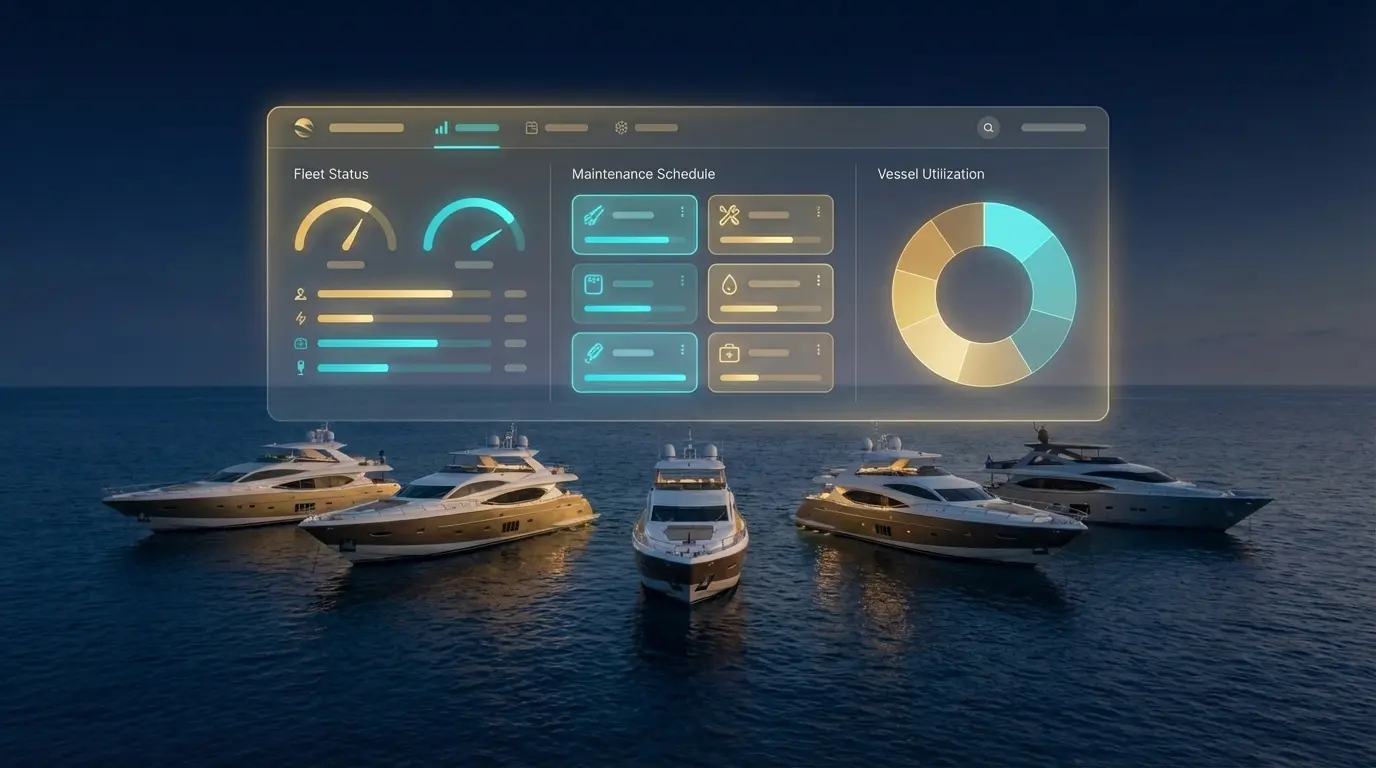
Unified vessel dashboard: See all vessels at a glance — status, location, upcoming schedules. Drill down into individual vessel details instantly.
Cross-vessel crew scheduling: Visualize crew assignments across the entire fleet. Prevent double-booking. Enable mobile schedule access for captains and crew.
Maintenance tracking with automated reminders: Handle both calendar-based and hour-based service intervals. Auto-regenerate recurring tasks. Send reminders before services are due.
Per-vessel expense tracking and reporting: Categorize expenses by type and vessel. Generate P&L reports per boat. Compare operating costs across the fleet. Set budgets with overage alerts.
Charter management for multiple vessels: Check fleet-wide availability instantly. Prevent booking conflicts automatically. Handle different charter types — bareboat, crewed, day charters.
Mobile access for captains and crew: Log engine hours, submit maintenance requests, update checklists, and access vessel documents from their phones while on the water.
The YachtWyse Fleet plan was specifically designed to check all these boxes for operators managing up to 10 vessels. It includes everything in the Charter plan plus cross-fleet dashboards, standardized checklists, and unlimited team members.
Making the Transition Without Chaos
You don't have to migrate your entire operation overnight. The smoothest transitions happen in phases.
Start with one or two vessels. Choose your most active or most complex vessels and set them up fully in the new system. Get comfortable with how maintenance tracking, expense logging, and crew scheduling work. Once your team is proficient with those vessels, add the rest of your fleet.
Focus on forward-looking data first. Don't try to import every historical record from day one. Set up your vessels with current information — upcoming maintenance, active crew assignments, existing charter bookings. You can backfill historical data over time if needed.
Get crew buy-in early. Your captains and crew will make or break the adoption. Show them how the mobile app makes their lives easier — how they can access vessel documents from their phones, log completed tasks instantly instead of remembering to email updates later, and see their schedules without calling the office.
When we made our transition, we ran both systems in parallel for about six weeks. By week four, everyone naturally gravitated to the software because it was simply easier. By week six, we'd stopped updating the spreadsheets entirely.
The Bottom Line
Fleet management software isn't an expense — it's infrastructure for growth. When you're running operations on spreadsheets, every new vessel makes your system more fragile. When you're running on purpose-built software, growth becomes manageable.
The fleet operators I know who are growing sustainably — adding vessels, increasing charter bookings, expanding to new markets — all have one thing in common: They abandoned spreadsheets years ago and built their operations on proper management platforms.
If you're managing three or more vessels and you're still relying on Excel, the question isn't whether to switch — it's how much longer you can afford to wait.
Frequently Asked Questions
How many vessels do I need before fleet management software makes sense?
The tipping point is typically around 3-4 vessels. Once you're managing multiple boats, the coordination complexity and risk of errors make spreadsheets genuinely dangerous to your operation. Some operators switch earlier if they're running active charter operations or managing complex maintenance schedules.
Can I try fleet management software before committing?
Most reputable platforms offer free trials or demo periods. YachtWyse provides a free Skipper plan where you can test with up to 2 vessels, plus a 14-day trial on paid plans. Use the trial period to run it in parallel with your existing system and compare the experience.
What happens to my data if I cancel the subscription later?
You should always be able to export your data before canceling. Look for platforms that offer CSV or PDF exports of your maintenance records, expense reports, and vessel documentation. Your data should remain yours regardless of whether you continue the subscription.
How long does it take to get a fleet fully set up?
For a typical fleet of 5-10 vessels, expect about 1-2 weeks to get everything configured — entering vessel details, setting up maintenance schedules, uploading key documents, and training your team. You can be operational in a few days if you start with core features and add complexity over time.
Do I need to be tech-savvy to manage fleet software?
Not at all. Modern yacht management platforms are designed for marine professionals, not IT departments. If you can use email and navigate a website, you can use fleet management software. Most platforms offer onboarding support and responsive customer service to help you get started.

Written by
YachtWyse Team
Maritime Technology Experts
The YachtWyse team brings decades of combined experience in maritime operations, marine engineering, and software development. We write from real-world experience managing vessels from 30ft cruisers to 100m+ superyachts.
Ready to Simplify Your Yacht Management?
YachtWyse helps owner-operators track maintenance, manage costs, and get AI-powered diagnostic assistance. Start your free trial today.
Request a DemoRelated Articles
Why Management Companies Ditch Legacy PMS
Yacht management companies are replacing legacy software with AI-powered PMS platforms. Learn the signs, real costs, and how to make the switch.
Fleet-Wide Tide-Aware Anchor Watch for 2026
Fleet anchor watch finally goes shore-side. Tide-adjusted swing radius, fleet dashboards, captain-rotation handover, and audit-grade logs for multi-vessel ops.
Enterprise Anchor Monitoring: Tide-Aware Risk Control
Tide-aware anchor monitoring reduces false alarms and missed detections across commercial yacht fleets — a practical risk-management upgrade for operators.