Best Boating in Tampa Bay: Insider's Guide for Yacht Owners
Quick Summary
- ✓Tampa Bay offers exceptional cruising grounds from Egmont Key at the mouth to Clearwater Beach, with protected anchorages, pristine state parks, and spoil islands perfect for weekend getaways.
- ✓The bay's main ship channel runs north-south at 43-44 feet deep for commercial traffic, while recreational boaters should stay west in 15-25 foot waters to avoid ships and congestion.
- ✓Summer afternoon thunderstorms are the biggest challenge, developing between 2-6 PM with intense lightning and 40+ knot wind gusts—plan morning departures and be anchored or back at the marina by 2 PM.
- ✓Top anchorages include Egmont Key for clear water and swimming, Three Rooker Island for the social boating community, and Caladesi Island State Park for pristine beaches accessible only by boat.
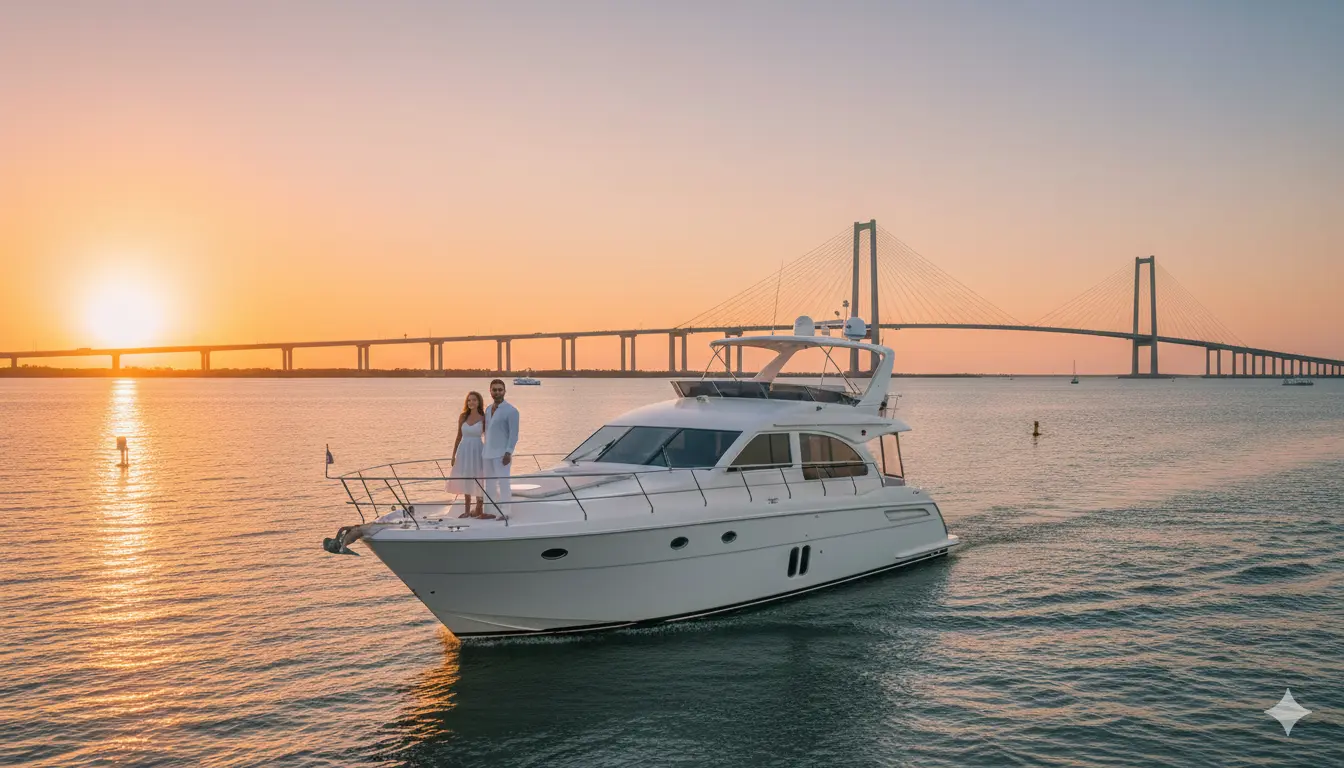
The sun was just starting to climb over the Sunshine Skyway Bridge when I cast off the dock lines that Saturday morning. My 42-foot Sea Ray had been ready since dawn—fuel tanks topped off, coolers packed with sandwiches and cold drinks, and my wife already on the bow with her coffee, watching a pod of dolphins play in the marina's wake zone. We had the whole weekend ahead of us, and I'd planned a route that would take us through some of the best cruising grounds on Florida's Gulf Coast: a leisurely island-hopping adventure from Tampa Bay to Clearwater.
If you own a yacht in Tampa Bay or you're considering making this area your home port, you're in for a treat. After five years of cruising these waters nearly every weekend, I've learned which anchorages offer the best sunsets, which marinas actually answer their VHF radio, and where you'll find that perfect combination of calm water and excellent dining within dinghy range. (New to yacht ownership? Check out our first-time yacht owner guide and understand the real costs of yacht ownership in Florida before you buy.) This is the guide I wish someone had handed me when I first brought my boat down from Fort Lauderdale.
My Favorite Weekend: Island Hopping Tampa Bay to Clearwater
That particular Saturday started like most of my favorite trips do—departing from Apollo Beach Marina around 7 a.m. to beat the afternoon thunderstorms. The plan was simple but spectacular: cruise down through the mouth of Tampa Bay, swing around Egmont Key for a mid-morning swim, then work our way north along the barrier islands to spend Saturday night at Three Rooker Island before finishing Sunday at Caladesi Island State Park.
The run down the ship channel from Tampa Bay to Egmont Key took about 90 minutes at a comfortable 18 knots. I stayed west of the main shipping channel, keeping an eye on AIS as a couple of cargo ships made their way toward Port Tampa Bay. The water was that gorgeous blue-green color you only get in the Gulf, and the wind was a perfect 10 knots from the southeast—enough to keep us cool but not enough to kick up any chop.
Egmont Key appeared on the horizon right on schedule, and I throttled back as we approached the northwest side. This uninhabited island sits right at the mouth of Tampa Bay, and it's one of my favorite spots for a morning swim. The water is typically 10-15 feet deep on the northwest anchorage, with good holding in sand. I dropped the hook in about 12 feet, backed down to set it properly, and we had the place almost to ourselves—just two other boats anchored a respectful distance away.
The island has a fascinating history. It's home to a lighthouse that's been guiding ships into Tampa Bay since 1858, and during the Spanish-American War, it was used as a detention camp. Now it's a wildlife refuge, and you'll see gopher tortoises wandering around like they own the place (which, technically, they do). We spent two hours there—swimming, walking the beach, and watching the frigatebirds soar overhead.
By noon, the afternoon sea breeze was building, so we hauled anchor and headed north. This is where Tampa Bay cruising gets really special. The stretch from Egmont Key up to Clearwater takes you past some of Florida's best beaches—Pass-a-Grille, St. Pete Beach, Treasure Island, Madeira Beach. You're running in the Gulf, so the water is typically deeper and clearer than inside the bay, but you're never more than a mile or two from a marina if the weather turns.
We made our way up to Three Rooker Island, which sits just off the northern tip of Anclote Key. This is a lesser-known gem that many cruisers miss because it's not on everyone's radar. It's a spoil island—created from dredged material—but it's become a popular weekend hangout for boaters who want a more laid-back scene than the party crowd at Beer Can Island or Passage Key.
I anchored on the southeast side in about 8 feet of water, bow pointing into the wind. By mid-afternoon, about a dozen boats had gathered, creating an impromptu raft-up party. Someone had a portable speaker playing classic rock, a couple with a Boston Whaler had brought their paddleboards, and the boat next to us shared some of their fresh-caught snapper for dinner. This is the Tampa Bay boating community at its best—friendly, welcoming, and always ready to help if someone's anchor starts dragging.
We spent Saturday night swinging gently on the hook, watching the sun set over the Gulf in brilliant oranges and purples. The lights of Tarpon Springs twinkled to the east, and we could hear the distant sound of live music drifting across the water from one of the waterfront restaurants. These are the moments that make boat ownership worth every dollar.
Sunday morning, we cruised the short distance to Caladesi Island State Park. If you've never been to Caladesi, put it at the top of your list. It's consistently rated one of the best beaches in America, and for good reason. The island is only accessible by boat, which keeps the crowds manageable. The state park operates a marina with about 100 slips available for day use ($2 per foot when I was last there), or you can anchor in the designated area and dinghy in.
We took the dinghy to the beach, hiked the nature trail through the island's interior (look for the osprey nests), and had lunch at the small café near the marina. By 2 p.m., we were headed back down the coast, tired, sunburned, and already planning next weekend's adventure.
Tampa Bay Geography for Boaters
If you're going to cruise Tampa Bay regularly, understanding the geography is essential. Tampa Bay isn't just one body of water—it's a complex system of bays, channels, passes, and shallow flats that requires attention to your charts and tide tables.
The bay itself is roughly 400 square miles, making it Florida's largest open-water estuary. It's divided into several distinct sections: Old Tampa Bay to the northwest, Hillsborough Bay to the northeast, Middle Tampa Bay in the center, and Lower Tampa Bay to the south where the bay opens to the Gulf of Mexico.
The main ship channel runs north-south through the center of the bay, maintained at 43-44 feet deep to accommodate cargo ships heading to Port Tampa Bay. As a recreational boater, I stay west of this channel when cruising north or south—there's plenty of water (typically 15-25 feet), and you won't be dealing with commercial traffic.
Critical navigation points to know:
The Sunshine Skyway Bridge is the most dramatic landmark, spanning the mouth of Lower Tampa Bay with a 175-foot vertical clearance at the center span. Unless you're on a sailboat with an extremely tall mast, clearance isn't an issue, but the bridge creates some interesting current patterns. I always plan to pass under the bridge when the current is favorable—fighting a 2-3 knot ebb current is no fun, and it eats fuel.
Egmont Channel is the primary entrance from the Gulf, well-marked with buoys and running in water that's 25-40 feet deep. There are two other passes: Southwest Channel (which I use less frequently) and Passage Key Inlet, which is much shallower and really only suitable for boats drawing less than 4 feet.
Inside the bay, you need to watch for shallow areas. The Flats on the eastern side of Lower Tampa Bay are notorious—I've seen boats run aground there during low tide. The water can be as shallow as 2-3 feet at low water. Always, always, always keep your eyes on your chart plotter and depth sounder when exploring new areas.
The Courtney Campbell Causeway and Howard Frankland Bridge further north both have clearances around 65 feet, which matters if you're on a sailboat. The Gandy Bridge has even less clearance at certain sections, with one section under 25 feet—know your air draft if you're heading into Old Tampa Bay.
One more critical note: Tampa Bay has bridges that open on schedule. The Belleair Causeway Bridge in Clearwater opens on the quarter hour during certain times. Plan your trips accordingly, or you could be waiting 30-45 minutes for the next opening.
Top Anchorages and Destinations
Over the years, I've anchored in probably 50 different spots around Tampa Bay and the surrounding Gulf Coast. Some became instant favorites; others taught me valuable lessons about where not to anchor. Here are the spots I return to again and again.
Egmont Key
I already mentioned Egmont, but it deserves a deeper dive. This is hands-down my favorite spot for a day trip from anywhere in Tampa Bay. The northwest anchorage is the most protected and offers the best swimming, with water that's usually crystal clear. The bottom is sand with good holding—I've ridden out 20-knot winds there without issue.
The southern tip of the island has stronger currents (you're right at the mouth of Tampa Bay), so I only anchor there if the northwest side is too crowded. The island itself is a wildlife refuge, so you can explore the beaches and trails, but no camping, no fires, and absolutely no disturbing the gopher tortoises or nesting birds.
Pro tip: The best swimming is at high tide. At low tide, the water gets shallow quickly, and you'll be walking through seagrass. Check your tide tables before you go.
Three Rooker Island
This spoil island has become increasingly popular, and for good reason. It offers protection from south and west winds, the water is typically calm enough for swimming, and the vibe is decidedly relaxed. On weekends during summer, you'll find 20-40 boats anchored here, but it never feels overcrowded.
The southeast side is my preferred spot—7-10 feet of water, sandy bottom, good holding. The north side can be rolly if there's any wind from that direction. There's a small beach on the island where people gather, and it's become a bit of a social scene. If you're looking for quiet solitude, this isn't your spot on Saturday afternoon, but if you enjoy the boating community atmosphere, it's perfect.
Caladesi Island State Park
As I mentioned earlier, Caladesi is special. The state park marina offers slips, but I actually prefer anchoring in the designated anchorage area north of the marina. It's free, the holding is excellent (mud and sand), and you're just a short dinghy ride from the beach.
The downside is that the anchorage is exposed to northwest winds, so if a cold front is coming through, you'll want to be somewhere else. I only anchor at Caladesi during settled weather with winds from the south or east.
The island has a great nature trail that loops through the interior—about 3 miles round trip. You'll see osprey, herons, maybe an eagle if you're lucky. The beach on the Gulf side is pristine, and the water is shallow enough that you can walk out 100 yards and still only be waist-deep.
Passage Key and Beer Can Island
These two spoil islands sit just north of Egmont Key and south of the Skyway Bridge. They're party central on weekends—especially during the summer. If you have teenagers or you enjoy a more social scene with music, rafted boats, and lots of activity, these are your spots.
Passage Key is the larger of the two, with anchorage all around the island. The west side offers the most protection from the prevailing southeast wind. Beer Can Island (its unofficial name—there's no official designation on charts) is smaller and gets absolutely packed on weekends.
I'll be honest: these aren't my favorite spots anymore. They're fun occasionally, but the combination of crowded conditions, inexperienced boaters anchoring too close, and the inevitable late-night noise makes me prefer quieter destinations. But if you're new to the area and want to meet other boaters, these islands are where you'll find the Tampa Bay boating community in full party mode.
Apollo Beach
Just south of the power plant in Apollo Beach (yes, really), there's an excellent anchorage that offers protection from nearly every direction. The power plant's warm-water discharge attracts manatees, and during winter months, you might see 50-100 manatees gathered there.
The anchorage is in Hillsborough Bay, with 8-12 feet of water and good holding in mud. It's not scenic—you're looking at power plant cooling towers and residential development—but it's functional and convenient if you're based on the eastern side of Tampa Bay. I use this spot when weather is questionable and I want a protected place to sit out some wind.
Tierra Verde and Boca Ciega Bay
The area around Tierra Verde, just south of St. Petersburg, offers several protected anchorages. The canals and basins around Fort De Soto Park are popular, though you need to pay attention to depth—some areas are only 5-6 feet at low tide.
I particularly like the anchorage just inside Bunces Pass on the south side. It's protected from the Gulf swell, the water is clean, and you're a short dinghy ride from Fort De Soto Park, which has excellent beaches and a great campground where you can walk to use the facilities.
Boca Ciega Bay, north of Tierra Verde, offers dozens of possible anchorages, but many are surrounded by residential areas with no-wake zones. It's a nice spot for a calm overnight stay if you don't mind being surrounded by waterfront homes.
Maximo Marina Anchorage
Just south of the approach to Maximo Marina in St. Petersburg, there's an excellent anchorage basin. It's well-protected, the holding is good, and you're close to restaurants and services in St. Pete. The downsides are that you're in a fairly industrial area (not scenic), and it can get crowded.
I use this spot primarily as a convenient overnight stop if I'm doing maintenance at one of the nearby boatyards or if I need to be close to St. Petersburg for shopping or dining.
Best Marinas and Service Facilities
Finding a good marina in Tampa Bay is like finding a good mechanic for your car—once you find one you trust, you stick with them. I've developed relationships with several marinas around the bay, each serving different needs.
Apollo Beach Marina
This is my home marina, so I'm admittedly biased, but Apollo Beach Marina is excellent for boats up to about 60 feet. The staff actually knows your name, the dockage rates are reasonable ($10-12 per foot per month for annual contracts when I signed up), and they have a good service department.
The marina sits in a protected basin with good surge protection from all directions. Fuel prices are competitive, they have a pump-out station, and the ship's store stocks the basics. The restaurant next door (Circles Waterfront Dining) is solid for breakfast and lunch.
For transient boaters, Apollo Beach Marina takes walk-ups if space is available—call ahead on VHF 16 or by phone. Expect to pay around $2.50-3.00 per foot per night for transient dockage.
Tierra Verde Marina
Located just south of St. Petersburg with easy access to both Tampa Bay and the Gulf, Tierra Verde Marina is one of the larger facilities in the area. They can accommodate boats up to 100+ feet, have a full-service yard, and offer both wet slips and dry storage.
I've used their service department several times for projects I couldn't handle myself—they're professional, their rates are competitive with other yards in the area, and they've never tried to upsell me on work I didn't need. That's rare and valuable.
Transient dockage is available, but call ahead—they're popular with cruisers coming into Tampa Bay from the Gulf. Rates are around $3.00 per foot per night. They monitor VHF 16.
St. Petersburg Municipal Marina
If you want to be right in downtown St. Petersburg with walking access to restaurants, museums, and nightlife, this is your spot. The marina is well-maintained, the staff is professional, and the location can't be beat.
The downsides are that it's more expensive than other options ($3.50-4.00 per foot for transient dockage), and on weekends with events downtown, the area gets busy. But if you want to spend a weekend in St. Pete without dealing with a car, this marina is perfect.
They have full amenities: power, water, pump-out, fuel, showers, laundry. The dockmaster's office monitors VHF 16, but during busy season, call ahead to ensure they have space.
Clearwater Municipal Marina
Located right in Clearwater Harbor, this marina puts you within walking distance of Clearwater Beach (via a short walk or quick Uber ride). The marina can accommodate boats up to 100 feet, with transient slips available for around $3.00 per foot per night.
The facility is clean and well-maintained, with all the standard amenities. The biggest advantage is the location—you're close to beach restaurants, shops, and nightlife. The downside is that the marina can get exposed to chop if winds are strong from the southwest or west.
Maximo Marina
This is one of the largest marinas on Tampa Bay's east side, with extensive repair facilities and services. If you need haul-out, bottom paint, mechanical work, or electronics installation, Maximo has the capability to handle it.
I had my bottom painted here last year—the yard crew was professional, the work was done on schedule, and the price was exactly what they quoted (which is sometimes rare in the marine industry). For transient dockage, rates run around $2.50-3.00 per foot.
Emergency Service and Fuel
For fuel, my go-to spots are Apollo Beach Marina (convenient to my home dock), Tierra Verde Marina (good prices, easy in-and-out), and the fuel dock at St. Petersburg Municipal Marina (when I'm cruising the west side of the bay).
If you need emergency service or towing, SeaTow and BoatUS both operate in Tampa Bay. I maintain a SeaTow membership ($165 annually for unlimited towing) and I've used it twice—once for an overheating engine issue, once when my transmission decided to quit near Egmont Key. Both times, they responded within 45 minutes and handled the situation professionally.
For marine supplies, West Marine has locations in Tampa and St. Petersburg. For better selection and prices on electronics, check out Milltech Marine in Clearwater—they're a Garmin and Raymarine dealer, and their installation work is top-notch.
Seasonal Considerations
Tampa Bay boating is a year-round activity, but each season brings different considerations. After five years here, I've learned when to go and when to stay home.
Summer (June-September)
Summer is peak boating season, which means crowded anchorages and full marinas on weekends. The water is warm (mid-80s), the days are long, and the Gulf is typically calm in the mornings.
The biggest challenge: afternoon thunderstorms. During summer, thunderstorms develop almost daily, typically between 2-6 p.m. These aren't the gentle rain showers you might see in other parts of the country—these are intense systems with frequent lightning, wind gusts to 40+ knots, and heavy rain that reduces visibility to near zero.
My strategy is to leave the dock early (6-7 a.m.), enjoy the morning and early afternoon, and either be anchored or headed back to the marina by 2 p.m. If I'm at anchor and a storm develops, I stay on the boat, monitor the anchor, and wait it out. These storms typically last 30-60 minutes, then pass.
Never, ever try to outrun a Florida thunderstorm. If you see one developing, head for the nearest protected anchorage or marina and wait it out. The lightning is dangerous, and the winds can be severe.
Red tide is another summer consideration. This natural phenomenon (algae blooms that kill fish and cause respiratory irritation) can occur any time of year, but it's most common during late summer and fall. Check FWC's red tide reports before heading out. If red tide is present, you'll notice dead fish on beaches, a distinctive smell, and possible respiratory irritation.
Fall (October-November)
Fall is arguably the best time to cruise Tampa Bay. The afternoon thunderstorms have diminished, the water is still warm (70s), and the weather is generally stable. Temperatures are perfect—highs in the 80s, lows in the 60s—and humidity drops to reasonable levels.
This is when I plan my longer cruises. The Gulf is typically calm, cold fronts are still infrequent, and the snowbirds haven't arrived yet, so anchorages and marinas are less crowded.
The only downside is that this is also hurricane season (officially through November 30). In my five years here, I've only had to prepare for one hurricane (thankfully, it turned away), but you need to be ready. Know your hurricane plan, know where you'll take your boat (or whether you'll haul it), and monitor forecasts closely during hurricane season.
Winter (December-March)
Winter is cruising season for a different reason—the snowbirds arrive, the marinas fill up, and there's a festive atmosphere on the water. The weather is generally excellent, with daytime highs in the 70s and clear skies.
The challenges are cold fronts and wind. Cold fronts push through every 7-10 days during winter, bringing 24-48 hours of north or northwest winds (often 15-25 knots) and cooler temperatures. Behind the front, you'll get gorgeous clear days with light winds—perfect for cruising.
I watch the forecast and plan my trips for the calm days after fronts pass. If a strong front is coming, I stay at the dock or find a well-protected anchorage. The bay can get rough with north winds, especially if they blow for multiple days—waves build in the fetch from the north end of the bay, making for an uncomfortable ride.
Water temperatures drop to the 60s during winter, which means wetsuits if you're swimming or diving. It also means manatees congregate in warm-water areas like Apollo Beach's power plant discharge.
Spring (April-May)
Spring is another excellent season. Water temperatures rise back into the 70s, winds are generally moderate, and the afternoon thunderstorm pattern hasn't kicked in yet. This is when I plan overnight trips to more distant destinations, knowing I'll have stable weather windows.
Tarpon fishing is excellent during spring, and you'll see boats gathered at known tarpon spots like the channel edges near the Skyway Bridge.
Local Regulations and No-Wake Zones
Understanding local boating regulations is essential, both for avoiding tickets and for protecting the environment. Tampa Bay has extensive manatee protection zones, speed restrictions, and regulated areas.
Manatee Zones
Florida takes manatee protection seriously, and Tampa Bay has numerous slow-speed and no-wake zones, especially in shallow areas where manatees feed. These zones are marked with signs showing "Manatee Zone" and the speed restriction (typically "Slow Speed - Minimum Wake" or "Idle Speed - No Wake").
The most extensive manatee zones are in shallow areas: near Apollo Beach, around Fort De Soto Park, in Boca Ciega Bay, and throughout Old Tampa Bay. During winter (November 15 to March 31), additional seasonal restrictions apply in areas where manatees congregate for warmth.
Violations are expensive—fines start at $250 and go up from there. More importantly, manatees are endangered, and propeller strikes are a leading cause of death. I always slow down in shallow water, keep a lookout, and err on the side of caution.
No-Wake Zones
Beyond manatee zones, numerous no-wake zones exist near marinas, residential canals, and bridges. These are typically marked with regulatory buoys or signs. The definition of "no-wake" means operating at the minimum speed necessary to maintain steerage—typically 3-5 knots depending on your boat.
FWC and local marine patrol actively enforce these zones, especially on busy weekends. I've seen boats get pulled over and ticketed, particularly near popular marinas and beaches.
Restricted Areas
Several areas around Tampa Bay are restricted or prohibited for navigation:
- MacDill Air Force Base on the eastern shore has restricted waters clearly marked on charts. Don't cross into these areas—the Air Force takes security seriously.
- Port Tampa Bay shipping channels require vigilance. Stay clear of commercial traffic, monitor VHF 16, and yield right-of-way to ships in the channel.
- Certain spoil islands are designated as bird sanctuaries with no landing or anchoring allowed. These are marked on charts and with signs. Respect these closures, especially during nesting season.
Required Equipment
Florida law requires specific safety equipment based on boat length. For boats over 26 feet (which includes most yachts), you need:
- Life jackets for every person aboard (properly sized and Coast Guard approved)
- Throwable flotation device
- Fire extinguishers (number and type based on boat size)
- Sound-producing device (horn or whistle)
- Visual distress signals (flares or electronic)
- Navigation lights
I keep my safety equipment accessible and current. Flares expire, fire extinguishers need periodic testing, and life jackets wear out. Check your equipment at the start of each season.
Fishing, Diving, and Water Sports
Tampa Bay isn't just about cruising—it's also one of Florida's best spots for fishing, diving, and water sports.
Fishing
I'm primarily a cruiser, but I keep rods aboard and enjoy fishing when the opportunity arises. Tampa Bay is famous for its inshore fishing—snook, redfish, spotted sea trout, and tarpon are the primary targets.
Skyway Bridge is legendary for fishing. The remnants of the old bridge (the spans that collapsed in 1980) create artificial reef structures that hold baitfish and predators. You'll see boats anchored near the pilings, and the shore-based fishing at Skyway Fishing Pier State Park is excellent.
Egmont Key offers excellent snook and redfish fishing, particularly around the rocky shoreline and dock ruins. The edges of the ship channel near Egmont are also known for tarpon during spring and early summer.
The flats on the eastern side of Tampa Bay are classic inshore fishing grounds for trout, redfish, and snook. If you have a shallow-draft boat or flats skiff, you can pole through water that's 2-3 feet deep and sight-fish for tailing redfish.
Offshore, the Gulf offers grouper, snapper, kingfish, and more. Popular spots include artificial reefs, wrecks, and natural hard-bottom areas. You'll need to run 10-20 miles offshore to reach productive bottom, and you'll want a boat capable of handling Gulf conditions.
License requirements: Florida requires a fishing license for saltwater fishing, with some exceptions. Annual licenses are available online through FWC's website. If you're on a registered/documented vessel, you can purchase a vessel license that covers everyone aboard.
Diving and Snorkeling
Tampa Bay proper isn't known for diving—the water is typically murky with visibility under 10 feet due to sediment and tannins. However, once you get outside the bay into the Gulf, conditions improve dramatically.
Egmont Key offers decent snorkeling when conditions are right. The water clarity depends on recent weather and current, but I've had days with 20-30 foot visibility around the island's rocky edges. You'll see tropical fish, rays, sometimes small sharks.
Off Clearwater and Tarpon Springs, there are numerous artificial reefs and wrecks in 30-80 feet of water. These are legitimate dive sites requiring proper certification and equipment. I've done several dives on the USS Strength (a Navy ship sunk as an artificial reef off Clearwater) and the Madison II (a wreck off Tarpon Springs).
For the best diving in the region, you'll want to run south to Sarasota or Venice, or head to the Nature Coast near Crystal River (famous for manatee encounters in winter).
Water Sports
Tampa Bay's calm waters make it ideal for paddleboarding, kayaking, and wakeboarding.
Paddleboarding and kayaking are excellent around the barrier islands and in protected bays. I keep two paddleboards on my flybridge and use them at every anchorage. Caladesi Island, Egmont Key, and the mangrove areas around Fort De Soto are perfect for exploring by paddle.
Wakeboarding and tubing are popular in the broader sections of the bay where there's room to run. Just be mindful of no-wake zones, shallow areas, and other boats. The area between the Gandy Bridge and Courtney Campbell Causeway is a popular spot for water sports.
Jet skiing is common, though jet ski operators vary in experience and courtesy. Give them space, expect unpredictable behavior, and stay alert.
Cruising Beyond Tampa Bay
Once you've explored Tampa Bay thoroughly, the Gulf Coast offers incredible cruising opportunities in both directions.
South to Marco Island
The Gulf Coast ICW (Intracoastal Waterway) runs south from Tampa Bay through Sarasota, Venice, Charlotte Harbor, Fort Myers, and down to Marco Island and eventually the Keys. This route offers protected waters, numerous stopping points, and beautiful scenery.
From Tampa Bay, I typically exit through Egmont Key and run offshore in the Gulf to Venice, which makes a great first-night stop (about 50 nautical miles, 3-4 hours at cruising speed). Venice has several good marinas, including Crow's Nest Marina which is popular with cruisers.
From Venice, continue south to Charlotte Harbor (Punta Gorda or Boca Grande), then Fort Myers (access via the Caloosahatchee River), and eventually Marco Island. The entire run from Tampa Bay to Marco Island is roughly 120-150 nautical miles depending on your route—easily done in 2-3 days with overnight stops.
Boca Grande Pass near Gasparilla Island is famous for tarpon fishing and has strong currents—time your passage for slack water or favorable current. The pass can be challenging with wind against tide.
North to the Panhandle
Heading north, the Gulf Coast becomes more remote with longer distances between facilities. From Tampa Bay to Tarpon Springs is about 35 nautical miles, then to Crystal River (about 45 nautical miles from Tarpon Springs), then Cedar Key (another 45 nautical miles).
This stretch of coast is known as the Nature Coast—less developed, more wild, with extensive salt marshes and grass flats. It's beautiful but requires more careful planning because marinas and services are spread out.
From Cedar Key, you can continue north to Apalachicola, Panama City, and Destin, but you're talking about serious distance—150+ nautical miles from Cedar Key to Apalachicola with limited stopping points.
I've done the run to Crystal River several times (it's famous for manatee encounters in winter), but I haven't yet made the full run to the Panhandle. It's on my list for next season.
East to the Keys
From Tampa Bay, you can run south along the Gulf Coast to Marco Island, then cut across to the Keys through Shark River or around the southern tip at Cape Sable. Or you can trailer your boat to the east coast and launch in Key Largo or Islamorada.
The Keys are a completely different cruising experience—shallow water, coral reefs, strong currents, and a laid-back atmosphere that's unlike anywhere else. If you haven't cruised the Keys, put it on your bucket list.
Planning Extended Cruises
For any cruise beyond Tampa Bay, careful planning is essential:
- Weather windows: Wait for favorable weather, especially for Gulf passages
- Fuel range: Know your range at cruising speed and plan fuel stops
- Charts: Update your chart plotter and carry backup charts
- Communication: VHF radio is essential; consider a satellite communicator for offshore passages
- Provisioning: Stock up on food, water, and critical spare parts before departure
Tampa Bay Yacht Owner Community
One of the unexpected joys of yacht ownership in Tampa Bay has been the community. This is a tight-knit group of passionate boaters who help each other, share information, and genuinely enjoy spending time on the water.
Yacht Clubs
Several yacht clubs operate around Tampa Bay, each with different character and membership requirements:
Davis Islands Yacht Club in Tampa is one of the most established, with a focus on racing and sailing. They host regular regattas and social events.
St. Petersburg Yacht Club is another well-known organization with a beautiful clubhouse and active membership.
For powerboaters, Tampa Bay Yacht Club and Clearwater Yacht Club have active cruising programs and social calendars.
I'm not a yacht club member myself (not because they're not great, just because I haven't prioritized it), but many friends are members and speak highly of the camaraderie and events.
Events
Tampa Bay hosts several major boating events throughout the year:
St. Petersburg Power & Sailboat Show (December) is the region's largest boat show, held at the St. Petersburg Municipal Marina. It's a great place to see new boats, meet manufacturers, and attend seminars.
Gasparilla Pirate Festival (January) features a full-on pirate invasion of Tampa Bay, with hundreds of boats creating a flotilla. It's chaos, it's crowded, and it's a blast if you enjoy the spectacle.
Blessing of the Fleet events happen at several locations (Tarpon Springs, Cortez) and celebrate the area's fishing heritage.
Throughout summer, various poker runs, charity cruises, and raft-up events keep the calendar busy.
Online Communities
Beyond in-person events, several online communities serve Tampa Bay boaters:
Facebook groups like Tampa Bay Boating and Gulf Coast Cruisers are active with trip reports, questions, and advice.
Local forums and websites dedicated to fishing reports often have information valuable to cruisers as well.
Service Provider Recommendations
Over the years, I've developed relationships with service providers I trust:
For marine electronics, Milltech Marine in Clearwater does excellent installation work.
For canvas and upholstery, Shore Line Canvas in St. Petersburg has done covers for me—quality work at fair prices.
For mechanical work I can't handle myself, I use the service department at Tierra Verde Marina or Apollo Beach Marina.
For bottom cleaning, several independent divers work the area—ask at your marina for recommendations.
For detailing, Brilliant Boats does excellent work, though they're not cheap.
The best way to find good service providers is to ask other boat owners. The Tampa Bay boating community is generous with recommendations, and we all appreciate referrals to competent, honest professionals.
Logging Your Tampa Bay Adventures
Here's something I wish I'd started doing from my first day as a boat owner: keeping detailed trip logs. For the first couple of years, I'd return from a weekend cruise and think, "I should write down where we went, what we did, how much fuel we burned." But I never did it systematically.
Then last year, I started using YachtWyse to track my trips, and it's been a game-changer. Every time I cast off, I log the departure time, starting fuel level, and weather conditions. When I arrive at an anchorage or marina, I log the arrival, note the coordinates, and add details about the location.
Over the course of a season, these logs become an incredible resource. I can look back and see that Three Rooker Island anchorage we loved in August, complete with photos, coordinates, and notes about the holding and conditions. I can track fuel consumption and identify if my engines are burning more fuel than they should be. I can see maintenance patterns and upcoming service requirements.
But beyond the practical benefits, trip logs are memories. That perfect weekend island-hopping from Tampa Bay to Clearwater? I have the whole journey documented—departure times, routes, fuel stops, anchorages, photos of the sunset at Three Rooker Island, notes about the other boaters we met.
Years from now, when I'm older and maybe no longer able to cruise as actively, I'll have these logs as a record of adventures. I'll be able to read about that morning departure from Apollo Beach, the dolphins playing in the marina wake, my wife on the bow with her coffee, and the whole perfect weekend that followed.
YachtWyse makes logging simple—I can input data from my phone while underway, attach photos automatically, and the system tracks routes on a map. It calculates fuel consumption, reminds me of upcoming maintenance, and keeps all my vessel documents organized. But most importantly, it captures the story of each trip in a way that a simple GPS track or fuel receipt never could.
If you're cruising Tampa Bay regularly, whether you're exploring Three Rooker Island for the first time or running your hundredth trip to Egmont Key, take a few minutes to log the details. Document where you anchored, what the holding was like, what the weather did, who you met, what you saw. These small details fade from memory faster than you'd think, but written down, they become part of your boat's story—and your story as a yacht owner.
Final Thoughts
Tampa Bay has become more than just a place where I keep my boat—it's become part of my identity. I'm a Tampa Bay boater now, which means I know how to read the afternoon sky for thunderstorms, I understand that the best cruising window is September through May, and I can navigate from Apollo Beach to Clearwater without looking at the chart plotter (though I always keep it on).
I've learned which restaurants in Clearwater accept dinghy traffic, where to find the best Cuban sandwiches within walking distance of St. Petersburg Municipal Marina, and which anchorages offer that perfect combination of protection, scenery, and solitude.
I've made friends at anchorages, helped tow a disabled boat to safety, and been helped myself when my engines overheated near Egmont Key. I've watched countless sunsets from the flybridge, listened to rain drum on the cabin top during summer squalls, and felt the deep satisfaction of a well-executed anchoring in strong wind.
If you're new to Tampa Bay or considering making it your cruising home, welcome. The water is warm, the cruising grounds are extensive, and the boating community is welcoming. Take your time learning the area—don't rush to hit every anchorage in the first month. Respect the local regulations, protect the manatees, and always keep an eye on the afternoon sky during summer.
Most importantly, document your adventures. Whether you use YachtWyse or a simple notebook, keep track of where you go, what you see, and what you learn. These waters have stories to tell, and your journey through them deserves to be remembered.
Fair winds and following seas. I'll see you out there—probably at Three Rooker Island on a Saturday afternoon, or anchored off Egmont Key on a perfect Sunday morning.
Ready to start documenting your Tampa Bay adventures? Try YachtWyse free for 30 days and discover how easy it is to track your trips, manage maintenance, and capture memories from every cruise. Whether you're exploring Egmont Key for the first time or planning an extended Gulf Coast voyage, YachtWyse helps you log every detail—fuel consumption, route coordinates, weather conditions, and the stories that make each trip special.
Start Your Free Trial and make this season your most memorable yet.
Written by
YachtWyse Team
Maritime Technology Experts
The YachtWyse team brings decades of combined experience in maritime operations, marine engineering, and software development. We write from real-world experience managing vessels from 30ft cruisers to 100m+ superyachts.
Ready to Simplify Your Yacht Management?
YachtWyse helps owner-operators track maintenance, manage costs, and get AI-powered diagnostic assistance. Start your free trial today.
Request a DemoRelated Articles
Tide-Aware Anchor Alarm: The Feature Loopers Need
Your anchor alarm goes off at 3 a.m. The boat hasn't moved — it's the tide. Here's why every app gets this wrong and how tide-aware alarms work.
Why Your Anchor Alarm Lies to You at Low Tide
Every consumer anchor alarm app shares the same hidden flaw — it ignores the falling tide. Here's the geometry waking you up at 3am, and the fix that works.
Best Apps for Great Loop Cruisers 2026: The Complete Tech Stack That Actually Works
At a Looper rendezvous in Mackinaw City, we compared phones with 15 other cruisers. Everyone had different apps. Here's the essential app ecosystem that survived our entire 11-month Great Loop journey—navigation, weather, maintenance, community, and utilities.